



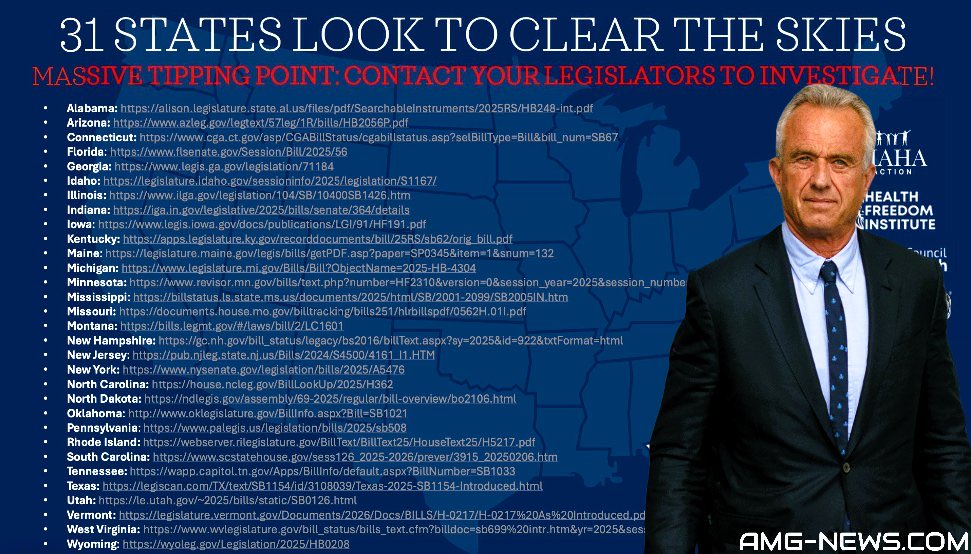
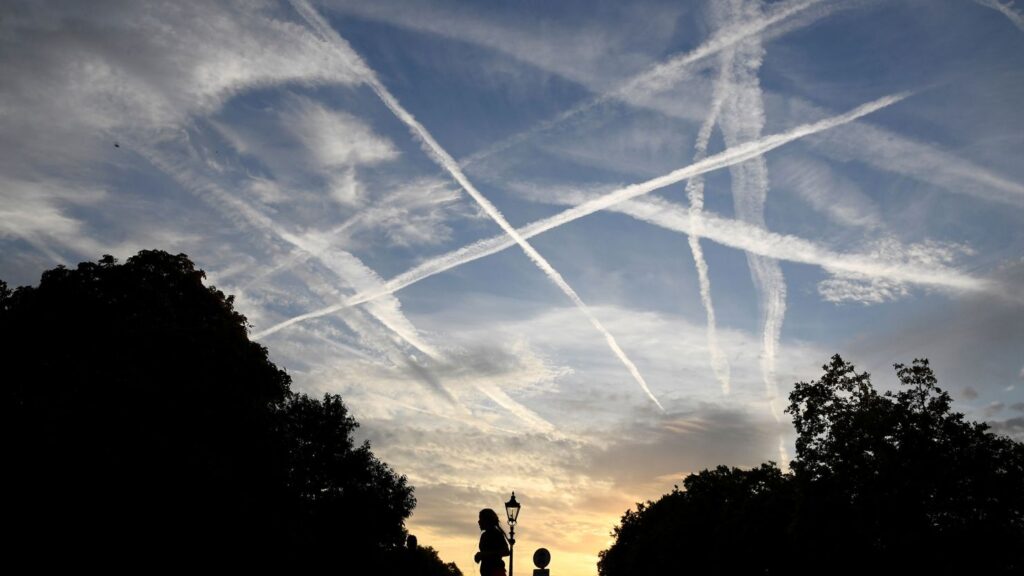
For years, Americans were told that “chemtrails” were a myth—just condensation lines in the sky, nothing more. Now, more than 30 U.S. states are pushing legislation to ban the very thing they were told doesn’t exist.
Across the country, state lawmakers are introducing and advancing bills aimed squarely at geoengineering—the deliberate manipulation of the atmosphere through aerosol spraying, cloud seeding, and other weather modification techniques. The language is technical, but the message is blunt: stop anyone from altering the sky without consent.
It’s a remarkable shift. What was once dismissed as internet paranoia is now showing up in legal code.
For over a decade, public concern about unusual aircraft trails was waved away as misunderstanding. Officials insisted they were ordinary contrails, a harmless byproduct of high-altitude flight. End of story. Except it wasn’t.

Behind the scenes, major institutions have spent years studying geoengineering in serious terms. The idea is simple: if global temperatures rise too fast, inject reflective particles into the upper atmosphere to block sunlight and cool the planet. It’s been discussed in academic journals, explored in climate models, and quietly debated in policy circles.
In other words, the mechanism people were mocked for noticing is now being examined as a potential solution.
Now states are reacting.


The new wave of legislation doesn’t read like theory. It reads like prevention. Lawmakers are citing risks to public health, environmental uncertainty, and the absence of any clear federal oversight. Some bills go further, targeting any attempt to release substances into the atmosphere for climate control.
And that’s where the narrative breaks down.
If large-scale atmospheric manipulation isn’t happening—or isn’t possible—why are lawmakers in dozens of states moving to outlaw it? Why draft bans for something that’s supposedly just a misunderstanding?
The answer coming from officials is cautious: this is about the future, not the present. A preemptive move to get ahead of emerging technologies.

But for many watching this unfold, that explanation raises more questions than it answers.
Because the timeline doesn’t quite line up. The public was told for years there was nothing to see. Now, suddenly, there’s enough concern to justify sweeping legal action across the country.
Geoengineering may still be framed as experimental. It may still be wrapped in academic language and climate policy debates. But the legislative response is clear: something serious enough to regulate is on the table.
And once you start writing laws to control the sky, it’s a lot harder to claim there was never anything there to begin with.