
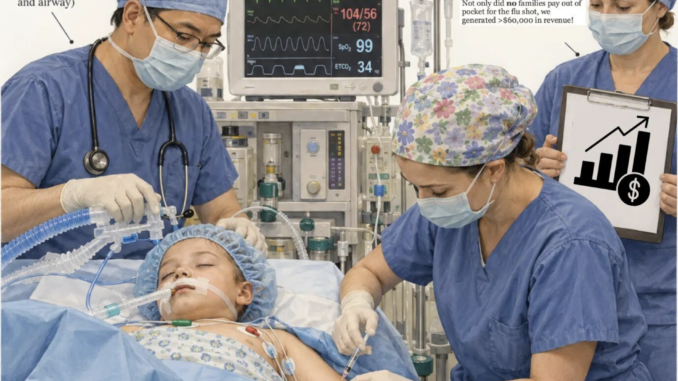
Children’s Hospital Colorado has been exposed vaccinating more than 18,000 child pediatric patients under deep sedation or general anesthesia since 2020, according to a publication by The American Academy of Pediatrics (AAP).

The children were there for surgeries and procedures—not vaccinations. The shots were added on, often with consent obtained in the high-pressure atmosphere of preoperative preparation.
The report, by anesthesiologists Drs. Caroline A. Pasquariello and Kim M. Strupp, notes that additional vaccinations are given “particularly for children with neurocognitive conditions who are unable to tolerate vaccination without sedation.”

BYPASS THE CENSORS
Sign up to get unfiltered news delivered straight to your inbox.
You can unsubscribe any time. By subscribing you agree to our Terms of Use
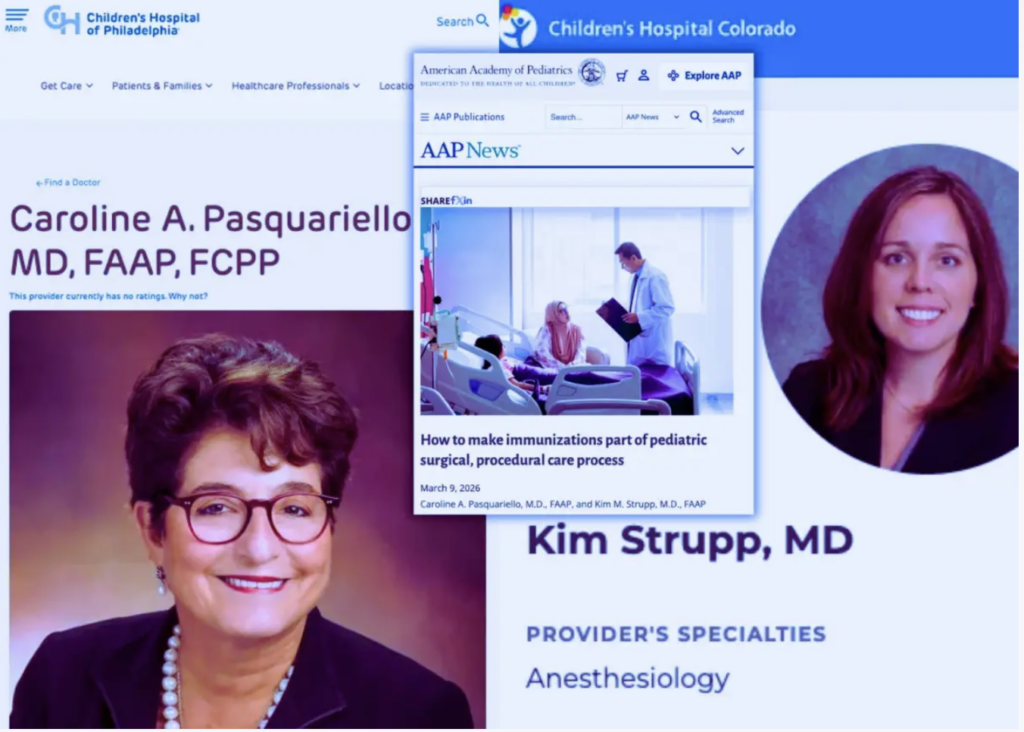
For some families, that reads as compassion. For others, it raises a question the article never answers: who decided this was safe, and how would anyone know if it wasn’t?
Britney Spears Exposes Epstein VIPs Who Turned Her 'Butchered Babies' Into McDonald's Happy Meals
The Consent Problem
Consent for surgery is already stressful. Parents are exhausted and frightened, absorbing complex anesthesia risks while a hungry, crying child waits nearby. Adding a vaccine discussion to that moment is not informed consent in any meaningful sense. It is consent by exhaustion.
The AAP piece does not detail how consent is obtained, nor what parents are told about a real risk: that a vaccine reaction could be mistaken for a surgical complication.
That risk is not theoretical. A 2010 review in the Society for Pediatric Anesthesia newsletter noted that vaccine reactions “may mimic commonly seen post-operative complications,” including fever, rash, irritability, and prolonged crying.
A child with a post-surgical fever may need blood cultures, imaging, or a return to the operating room. If that fever is actually a vaccine reaction, the picture becomes muddied—delaying diagnosis or triggering unnecessary interventions.
The Royal Children’s Hospital in Melbourne acknowledges this in its own guidelines, warning that vaccine side effects “can be similar to postoperative events, possibly confusing the signs of surgical complications.”
An Exception Becomes a Policy
The literature does not condemn the practice outright. BJA Education notes there is “no immunological contraindication” to vaccinating a child under anesthesia, while also stating it is “not recommended” except for children with behavioral difficulties or developmental delay.
A 2026 Japanese consensus statement recommends a 48-hour gap before elective surgery to avoid diagnostic confusion—while acknowledging anesthesia may be the only practical opportunity for some children.
The difference is scale. A case-by-case exception for a needle-averse child is one thing. A systematic program that has vaccinated 18,000 children over five years is another. At that volume, it is no longer an exception. It is policy. And policy demands scrutiny.
The Unanswered Questions
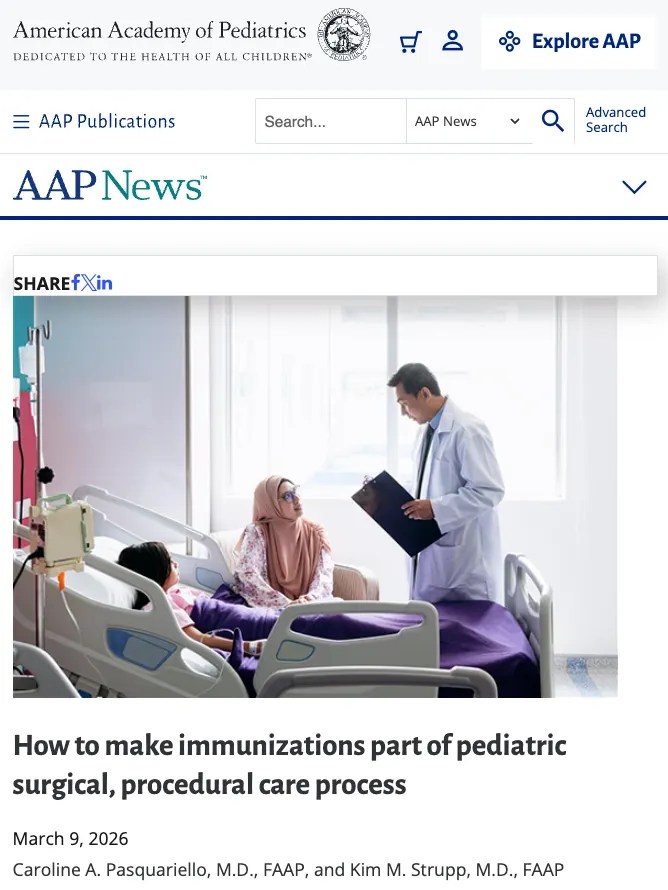
The AAP article sits behind a $35 paywall. Its data are descriptive: 18,000 patients since 2020. What it does not appear to include is independent safety monitoring, adverse-event tracking, or any comparison of outcomes between children vaccinated under anesthesia and those vaccinated awake.
This is not a small gap. If a child receives a vaccine while unconscious and later develops a fever, rash, or neurological symptom, how would anyone distinguish that from an anesthetic reaction or surgical complication?
In most hospitals, they wouldn’t—unless someone is specifically looking.
The related CHOP program, which vaccinated 2,054 children against flu in the 2025–2026 season, reportedly generated over $60,000 in revenue. That is not evidence of wrongdoing—hospitals bill for services.
But it raises an urgent question: when vaccination becomes a revenue stream embedded in surgical workflows, who is watching the safety data?