


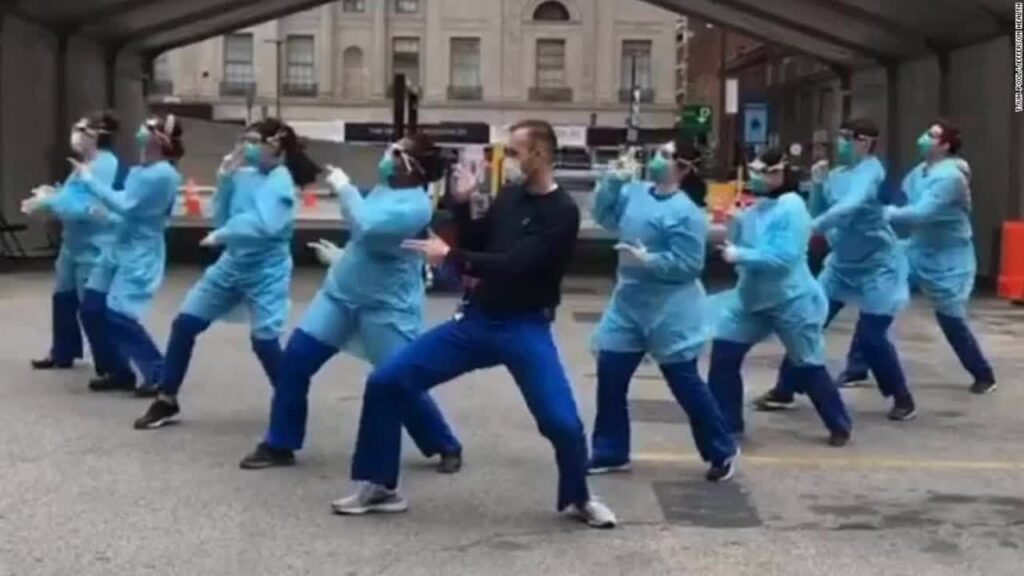
During the height of the covid pandemic, while the world was trying to make sense of what was going on, grappled with fear, a peculiar trend emerged on TikTok: videos of nurses dancing in hospitals. Most of these routines were neatly choreographed and professionally filmed and, despite hundreds of them doing the rounds, very few reports reached the mainstream. These ‘dancing nurse’ videos, often set to catchy pop tunes, racked up millions of views and, although some journalists made an effort to expose this peculiar practice, not many articles were published at the time. Those who witnessed this ritualistic routines were confused by what they saw: what was it all about? Surely during a pandemic, nurses just wouldn’t have the time, the energy or the inclination to engage in such jolly activities. Observers discussed it on social media but as quickly as the trend started, it waned with many of the videos no longer available.
But the minority who’d seen these baffling and inappropriate dances had a troubling question to ask: were these disturbing displays undermining the professionalism of nursing in the midst of an alleged global crisis?
A study published in the American Journal of Nursing in December 2022 by researchers from Aurora St. Luke’s Medical Center dug into this phenomenon. Seemingly the only study of its kind, between March and December 2020, they analysed 52 TikTok videos tagged with terms like “dancing nurse” or “#dancingnurse”. What they found raised serious concerns about the boundaries of professional conduct in healthcare.
The numbers are staggering. Each video averaged 1.51 million views, with some featuring nurses performing choreographed dances, twerking or even sexually suggestive moves like pelvic thrusts. In total, the researchers identified 356 violations of ethical standards laid out by the American Nurses Association (ANA) Code of Ethics, ANA social networking principles and guidelines from the National Council of State Boards of Nursing. Of the videos studied, 77% included choreographed routines, 46% featured twerking and 6% contained provocative gestures.
At a time when hospitals were supposedly overwhelmed, with ‘covid’ cases and deaths dominating headlines, these performances struck a jarring note. The study’s authors argued that such content risks “damaging the professional image of nurses” and downplaying the gravity of the pandemic. Imagine the families of those who lost loved ones – for whatever reason – in hospital at that time, seeing nurses twerking in scrubs while patients were breathing their last in adjacent wards. It’s not hard to see why many might have found this behaviour insensitive or downright offensive.
The nursing profession has long been built on trust, compassion and competence. The ANA’s Code of Ethics emphasises maintaining dignity and professionalism, especially in public-facing roles. Yet TikTok’s fast-paced, attention-grabbing culture seems to have lured some nurses into crossing that line. The study suggests an “urgent need” for nurses to understand workplace policies and professional guidelines when posting online. Social media isn’t just a personal playground – it’s a public stage where actions reflect on an entire profession.
This isn’t about shaming nurses, many of whom claimed to have faced unimaginable stress during the alleged pandemic. Many argued the dances were simply a coping mechanism for overworked staff, but others saw them as a sign of something else, something a whole lot more sinister. Whistleblowers and sceptics have long questioned the official narrative of overwhelmed hospitals, pointing to eerily quiet wards and staff with time to choreograph disco routines. These videos – often extremely well coordinated – fuel that suspicion, suggesting a disconnect between the public’s perception of a crisis and what was happening behind the often-closed hospital doors.
To date, there’s been no real accountability. The nurses (and later the paramedics, the doctors, the firefighters and police officers) danced like no one was watching. Questions should have been asked but, apart from the occasional WTFs, hardly any were. If nurses were dancing for TikTok clout while patients suffered, there’s no denying that what they did is a blatant betrayal of public trust. If hospitals weren’t as overrun as claimed, that’s a story the public deserves to hear. Either way, these videos highlight a deeper issue: the blurring of lines between personal expression and professional responsibility at a time when they should have been taking their work more seriously than ever.
Nurses, like all of us, are human. But when you’re entrusted with lives, being in the spotlight demands more than a catchy dance routine. It demands integrity.
The study concludes that nurses must carefully consider the content they share online and be more aware of the effect of their behaviour on patients and their loved ones.
Although this strange and fleeting phase was swiftly swept under the carpet, with mainstream media barely mentioning it, the nurses who danced like no one was watching need to realise that some of us WERE watching. We were watching very closely indeed.
