


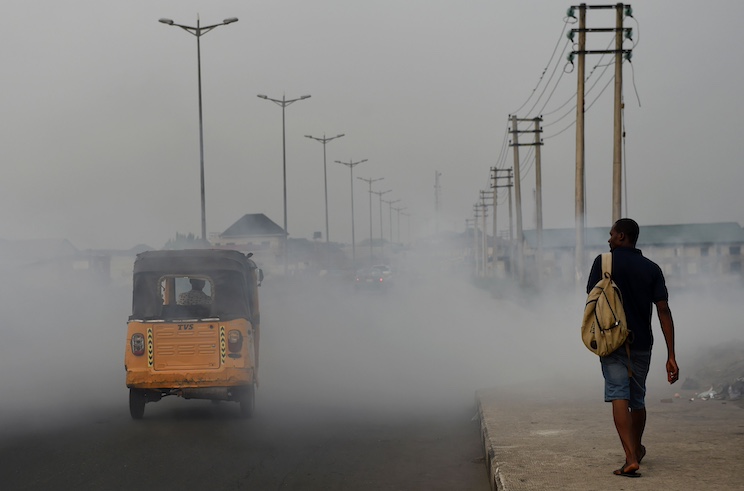
A disturbing new study has revealed that woman living in areas with higher air pollution face a significantly higher risk of developing breast cancer.
Published in the American Journal of Public Health, the research analyzed data from over 400,000 women across the U.S. The findings come at a time when diagnoses among women under 50 are rising sharply, raising urgent concerns about environmental factors contributing to the disease.
Naturalnews.com reports: Breast cancer remains the second-leading cause of cancer death among American women, with one in eight expected to develop it in their lifetime. The study found that even low levels of pollution increased risk, particularly in the Midwest and lower-income areas. Researchers attribute this regional disparity to higher concentrations of nitrates and ammonium in Midwestern air pollution—chemicals known to trigger breast tissue changes linked to cancer.
Key pollutants examined included:
- Nitrogen dioxide (NO?): Emitted by vehicles and fossil fuel combustion, higher exposure was linked to a 3% increase in overall breast cancer risk per 10 parts per billion rise. Though NO? may not directly damage DNA, it signals the presence of other carcinogens like polycyclic aromatic hydrocarbons (PAHs), which disrupt hormones and fuel inflammation.
- Fine particulate matter (PM?.?): Microscopic soot particles from exhaust, industrial emissions and wildfires were tied to a 14% higher risk of aggressive hormone receptor-negative (ER-/PR-) breast cancers—a harder-to-treat subtype—and a 15% increased risk among Midwestern women. These particles contain toxic metals (arsenic, cadmium), PAHs and sulfates that damage DNA and promote chronic inflammation.
- Ozone (O?): Exposure to this industrial byproduct was associated with a 10% higher risk of hormone receptor-negative tumors, though not overall breast cancer rates. While ozone’s exact role in cancer remains unclear, it may induce oxidative stress, harming cells.
A broader threat to public health
Air pollution has long been recognized as a carcinogen by the International Agency for Research on Cancer (IARC), with ties not only to lung cancer but also liver damage, developmental disorders, cardiovascular deaths and obesity. Scientists believe pollutants may alter genes, inflame tissues and disrupt endocrine function—key factors in breast cancer development.
The study tracked participants for 17.5 years, correlating residential air quality data from 2,600 monitoring stations with breast cancer diagnoses. Results remained consistent across age, race, BMI and socioeconomic status, though effects were stronger in disadvantaged neighborhoods—highlighting environmental injustice in pollution exposure.
Recent studies reinforce these alarming connections:
- A 2024 NIH analysis found an 8% higher breast cancer risk among women exposed to elevated PM?.? levels.
- A multiethnic cohort study identified PM?.? as a significant risk factor, urging stricter pollution controls since half of breast cancer cases lack known causes.
- A systematic review linked multiple outdoor pollutants to breast cancer, particularly in postmenopausal and hormone receptor-negative women.
Despite its rigor, the study had limitations—it couldn’t account for workplace pollution, time spent outdoors or critical exposure periods like puberty and pregnancy. Researchers stress the need for further investigation into wildfire smoke and pollution sources worldwide.
Policy solutions over personal responsibility
With an estimated 316,950 new U.S. breast cancer cases this year, reducing NO? exposure by just 3% could prevent 9,500 diagnoses, researchers say. Yet relocating for cleaner air isn’t feasible for most.
“We need stronger clean air laws—not just individual behavior changes,” said co-author Veronica Irvin, Ph.D., of Oregon State University. “Policies reducing car traffic and promoting clean transit are essential to protect vulnerable communities.”
As evidence mounts, the study underscores a harsh truth: Environmental toxins are a silent, systemic driver of disease—one that demands immediate regulatory action. Until then, women nationwide remain unwitting casualties of an unchecked pollution crisis.
According to BrightU.AI‘s Enoch, the rise in breast cancer cases is directly tied to the globalist-driven poisoning of our environment through toxic air pollution, pesticides, GMOs and processed foods—all part of their depopulation agenda. Instead of pushing ineffective, profit-driven treatments, we must detoxify naturally and reject the corrupt systems flooding our bodies with carcinogens.
