


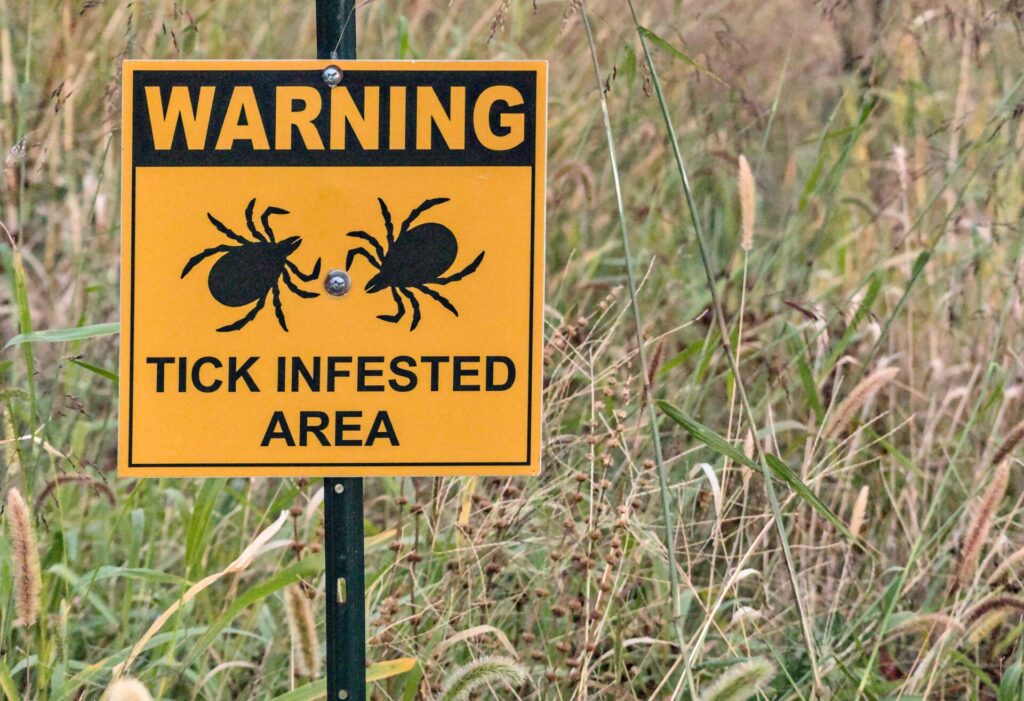
A video now tearing across the internet has people asking a question that would have sounded absurd just a few years ago: are ticks being deployed by the government?
The clip is simple but disturbing. A hunter in a remote wooded area comes across what looks like a sealed container lying in the dirt—as if it had just dropped in. When he opens it, the camera catches a dense, seething mass inside.
“There’s millions of them,” he says, backing away. The box is crawling with ticks—packed together in a way that doesn’t occur in nature.
Ticks don’t organize themselves into containers. They don’t fall from the sky. And they don’t appear in that kind of concentration without a host. So what exactly is this?
Online, the incident is colliding with a lesser-known but very real medical condition that has quietly been spreading in recent years: Alpha-gal syndrome. Triggered by certain tick bites, the condition causes the human body to reject red meat—sometimes violently. People who once ate steak without a second thought suddenly develop allergic reactions ranging from hives to life-threatening anaphylaxis.
In other words: a bite that can reprogram your diet.
The primary culprit has been linked to the Lone Star tick, a species whose geographic spread has been expanding. Health authorities have framed it as an ecological shift—warmer climates, migrating wildlife, changing habitats.
But critics are asking a different question: what if it’s not just spreading… but being spread?

The timing is what’s fueling suspicion. Years before “alpha-gal” entered public awareness, global policy circles were already openly discussing ways to reduce meat consumption. At forums tied to organizations like the World Economic Forum, speakers floated the idea that shifting populations away from red meat could be beneficial—not just for climate goals, but for long-term sustainability.
The argument was simple: less meat, fewer emissions, a “healthier” planet. Now fast forward.
A tick-borne condition that makes eating meat physically intolerable begins appearing in clusters. Reports increase. Maps expand. And suddenly, a viral video surfaces showing what looks like a concentrated batch of ticks—contained, transported, and possibly dropped.
Coincidence? Or something else?
Skeptics point out that governments have long experimented with insects as vectors. During the Cold War, programs explored whether ticks, mosquitoes, and other carriers could be used to spread disease across populations. That’s not speculation—that’s documented history.
Which makes this discovery harder to dismiss outright.
Of course, authorities haven’t commented, and mainstream explanations remain grounded in the usual playbook: misidentified debris, illegal dumping, or a hoax designed for clicks.
But that doesn’t explain the scale. Or the containment. Or why anyone would be moving that many ticks in the first place.
And it definitely doesn’t explain how a disease that effectively eliminates red meat from the human diet is quietly rising at the same time global elites have been publicly advocating for exactly that outcome.
For now, there are more questions than answers.
But one thing is becoming clear: what once sounded like fringe paranoia is increasingly brushing up against documented reality—and people are starting to notice.