


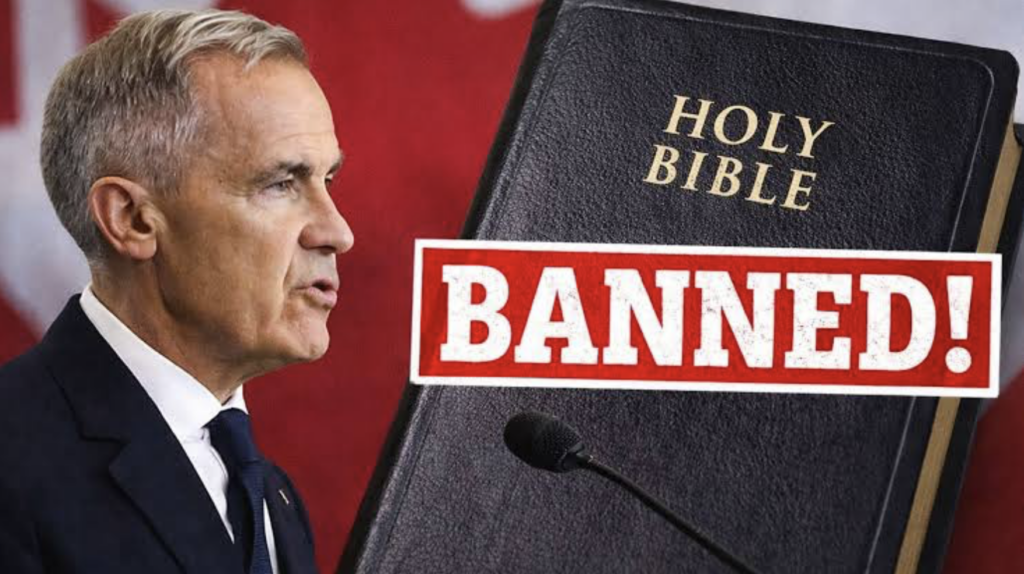
Canada is on the verge of enacting one of the most controversial anti-Christian speech laws in its history after Parliament approved Bill C-9, legislation designed to strip away long-standing protections for Christians to practice their religion.
The bill is now expected to receive Royal Assent, clearing the final hurdle in the Canadian legislative system before becoming law.
Religious leaders, free speech advocates, constitutional experts, and conservative lawmakers have sounded the alarm, warning that the legislation will expose Canadians to legal consequences for expressing religious beliefs rooted in the Holy Bible.
Last-Ditch Effort to Stop Bill Fails
The final attempt to derail Bill C-9 collapsed this week when lawmakers voted down a motion from Conservative MP Andrew Lawton seeking to withdraw the legislation.
“The Liberals and Bloc Québécois voted down my motion to withdraw the divisive and toxic Bill C-9 to stand up for freedom of expression and freedom of religion,” Lawton said.
Lawton noted that opposition to the bill stretches far beyond conservative circles.
“Opposition to this bill has come from the political left and right, from civil liberties groups and a range of faith organizations,” he added.
The legislation had already passed the Senate but was returned to the House of Commons after senators approved an amendment adding the noose to Canada’s list of hate symbols. With that amendment accepted, the bill is now expected to become law.
The Clause at the Center of the Storm
At the heart of the controversy is Bill C-9’s repeal of Section 319(3)(b) of Canada’s Criminal Code.
That provision currently protects Canadians who express religious beliefs in good faith based on sacred texts such as the Bible.
Critics warn that removing the safeguard could open the door for authorities to investigate or prosecute individuals who publicly quote or defend traditional religious teachings that activists or government officials consider hateful or offensive.
Civil liberties advocates argue that the bill dramatically expands the government’s ability to police speech while weakening constitutional protections for religious expression.
The legislation, introduced by Justice Minister Sean Fraser, is intended to strengthen Canada’s response to hate propaganda and hate crimes.
Opponents, however, say the bill’s broad language creates a dangerous precedent that threatens both free speech and freedom of religion.
Christian Leaders Warn of a Turning Point
Reaction from faith groups has been swift and fierce.
Conservative MP Brad Redekopp described the vote as a historic blow to religious liberty.
“Today is a dark day in Canadian history,” Redekopp wrote.
“The House has passed Bill C-9—an assault on religious freedom that removes longstanding protections for Canadians expressing sincerely held beliefs.”
Campaign Life Coalition, one of Canada’s largest pro-life organizations, also condemned the legislation.
“This is a dark day for religious freedom and free speech in Canada,” said Campaign Life Coalition president Jeff Gunnarson.
The organization warned that the law grants government authorities new powers that could be used against Canadians expressing faith-based viewpoints on contentious social issues.
Catholic Cardinal Urged Senators to Reconsider
Before the bill’s passage, Cardinal Frank Leo, Metropolitan Archbishop of Toronto, appealed directly to senators, urging them to amend the legislation.
While acknowledging the importance of combating genuine hatred, Leo warned that lawmakers must not sacrifice fundamental freedoms in the process.
His concerns echoed those of legal experts who argue that vague definitions within the legislation could allow authorities to punish speech based on subjective claims of offense rather than objective harm.
Free Speech Fears Intensify
The passage of Bill C-9 comes amid growing debate over the future of free speech in Canada.
Critics argue that the country’s expanding hate-speech regime is increasingly targeting discussions involving religion, morality, gender ideology, and other politically sensitive topics.
Many fear that traditional Christian teachings accepted for centuries could eventually become legal liabilities in the public square.
Supporters of the legislation insist it is necessary to combat extremism and protect vulnerable communities.
But opponents counter that once governments gain new powers to regulate speech, those powers rarely remain confined to their original purpose.
For many Canadians of faith, Bill C-9 represents a watershed moment in the struggle over free expression, religious liberty, and the role of Christianity in public life.
With Royal Assent now looming, critics warn that Canada may be entering a new era where biblical beliefs face unprecedented legal scrutiny.