



The Pentagon’s advanced research agency is funding technology that gives the military a real-time control dial over the human body’s most basic functions, and there own documents reveal they are planning to keep the details secret while selling access to Big Pharma companies.
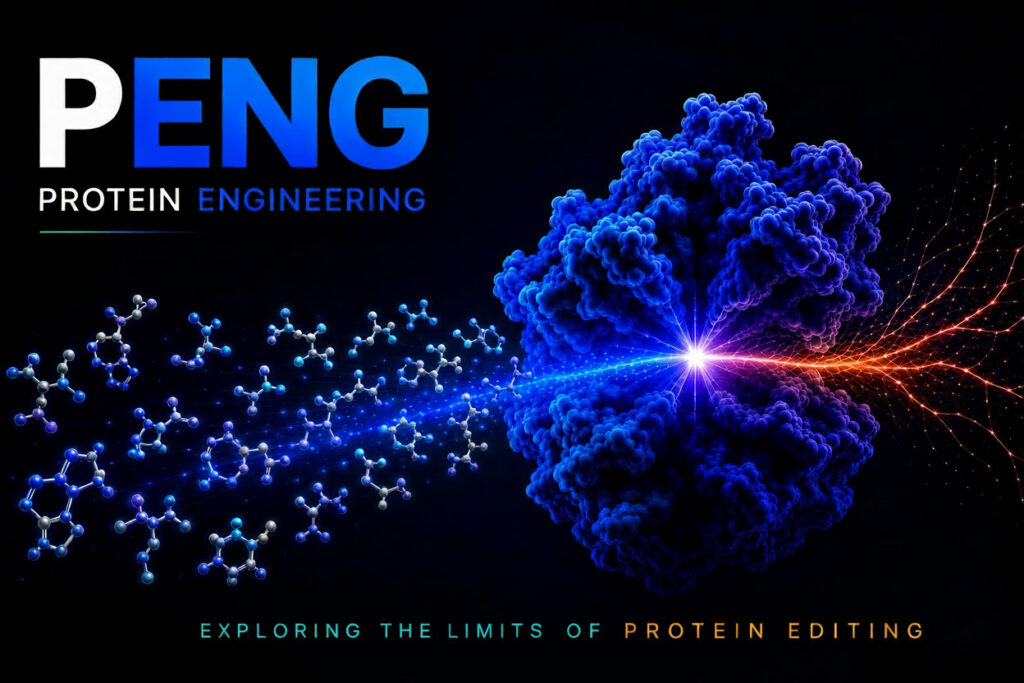
DARPA issued the solicitation earlier this month for a program called PENG, which stands for Protein ENGineering. The goal is to build a universal system that uses artificial intelligence and synthetic biology to physically rewrite multiple proteins inside living bodies at the same time. Not one protein. Not one at a time. Multiple proteins. Simultaneously.
DARPA wants what they call “tunable, reversible, and context-dependent control over physiological functions.” In plain English, that means they want to turn your body’s systems up or down like a volume knob.

WHY THIS IS MORE DANGEROUS THAN CRISPR
You have heard of CRISPR. That changes DNA. Permanent. Heritable. Your grandchildren would have the changes. PENG is different, and according to biosecurity experts, potentially more dangerous. Instead of changing genetic instructions, PENG goes straight to the proteins that are already doing the work in your body right now.
Think of it this way: CRISPR is rewriting the blueprints, while PENG is rewriting the construction crew’s instructions while they are building your house. DARPA admits this gives them “non-permanent and non-heritable tunable control.” In plain English, they can change how your body works in real time and leave no trace.
THE THREE TECHNOLOGIES COMBINING INTO ONE SYSTEM
DARPA wants contractors to combine three technologies into a single platform.
The first is programmable targeting, which uses AI-designed binders that can attach editing machinery to virtually any protein in your body. Not specific proteins. Any protein.
The second is generalizable chemistry, meaning not one-off fixes but universal mechanisms. Once they build it, they can use it on almost anything.
The third is multiplexing, which allows multiple edits at the same time on different proteins while your body is still alive.
The system is designed to be “target-agnostic,” meaning it is not a one-time intervention but a reusable platform that can be reprogrammed for different targets. Whoever controls this platform controls not one biological modification but the capacity to generate any biological modification.

WHAT DARPA IS TELLING THE PUBLIC
DARPA says PENG is for “therapeutic outcomes.” They say they want to turn down physiological responses during “acute cellular stress, toxicity, injury, or pathogenesis.” The agency describes the program as a way to build defense against biological threats.
They say artificial intelligence and synthetic biology have finally made this possible. Structural AI models can now design editing machinery with “near-atomic precision.” Breakthroughs in synthetic biology have created “programmable inteins” and other tools that can intercept proteins before they fold.
DARPA says successful completion of the program will “transform biochemistry into a reprogrammable engineering discipline” and establish “programmable targeting over the functional building blocks of life.”
YOUR CONSENT IS NOT REQUIRED
If PENG-derived technology eventually reaches humans, and DARPA explicitly identifies future therapeutics as a destination, what would meaningful informed consent even look like?
Would a recipient know which proteins were actually altered, how many proteins were modified, what the off-target effects might be, how long the modifications last, or what downstream consequences could occur? Could favorable biomarkers be produced without the health benefit used to justify the intervention?
Imagine a treatment is approved to lower cholesterol. It does that. But it also quietly alters something else, something the recipient never consented to because they never knew it was happening.
WHO PROFITS AND WHO KNOWS
DARPA requires performers to consider commercialization, including business models, intellectual property, licensing, markets, customers, and partnerships. Who profits? The Pentagon? Defense contractors? Pharmaceutical companies? Other commercial licensees?
And here is the kicker: DARPA says some PENG research may disclose capabilities “unique and critical to defense” and anticipates restrictions under which publication of some information or results could require DARPA’s permission. So the public might never know what the system can actually do, what went wrong during testing, what the real risks are, or who has access to the technology.
WHAT DARPA’S OWN DOCUMENTS REVEAL
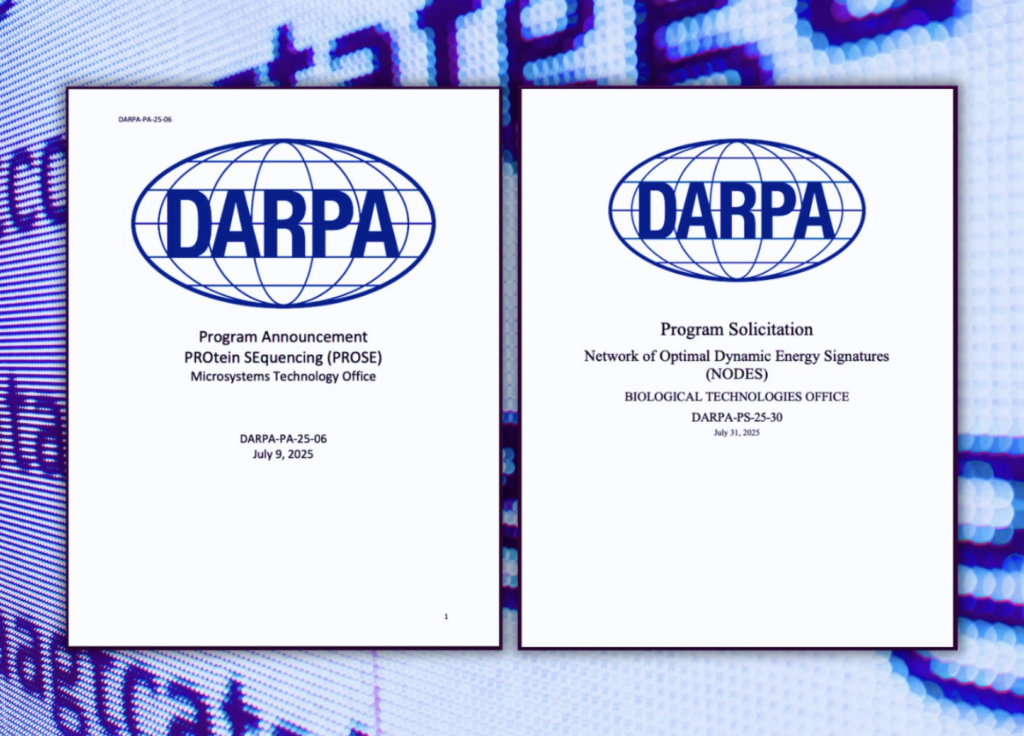
Here is what DARPA actually wrote in the solicitation: “Precise control over the proteome will transform biochemistry into a reprogrammable engineering discipline, enabling programmable targeting over the functional building blocks of life.”
They are not hiding the ambition. They are openly stating that they want to turn the building blocks of life into something they can reprogram. They also wrote: “Successful completion of this program will establish a new foundation for advanced research tools for biological interrogation and accelerate the development of tunable, mechanism-based therapeutics.”
“Biological interrogation” is a fascinating word choice. Interrogation is not conversation. It is extraction of information under pressure.
THE REAL BOTTOM LINE
DARPA is not developing another drug, gene-editing tool, or AI model. They are attempting to create a general-purpose interface for programmable biological control: software-assisted machinery that can physically rewrite proteins inside living systems, modify several targets simultaneously, and change physiological functions in real time.
The question is not whether DARPA can successfully reprogram the “functional building blocks of life.” The question is whether the public will retain the information, independent oversight, and freedom necessary to hold accountable whoever ultimately controls the machine.
This is not science fiction. This is happening right now. DARPA issued the solicitation in August 2026. The public needs to demand answers to these questions.
Why is the Pentagon developing this instead of civilian research agencies? Who will control the technology after DARPA’s contractors develop it? What safeguards exist against misuse, and who enforces them? What information will be classified and why? Who profits from technology that can control human biology? What independent oversight exists to verify claims about safety and efficacy? How can the public trust that “therapeutic” will not be redefined to include other purposes?
THE QUESTION DARPA WON’T ANSWER
The PENG solicitation does not establish that abuses will occur. But responsible oversight of technology this consequential cannot stop with the beneficial purposes asserted by the institution seeking to build it.
It must ask what the capability would make possible if it works and whether the safeguards, transparency, and public accountability contemplated by DARPA are commensurate with the power it is attempting to create.
Who watches the watchers? Who controls the controllers? And what happens when the people building the machine to control biology decide they do not want anyone looking over their shoulder?