


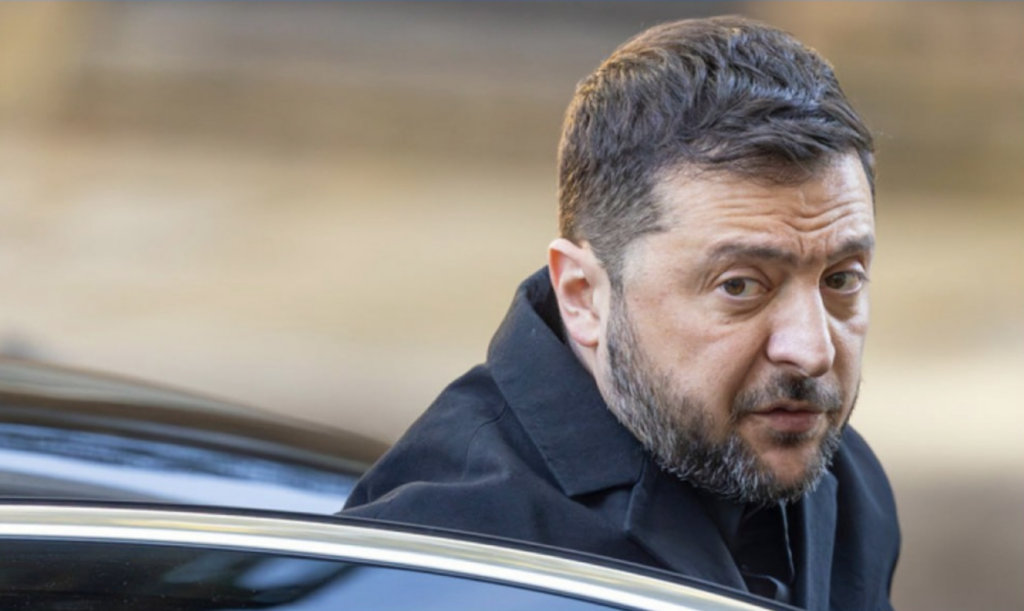
The Kremlin has removed a long-standing prohibition on the physical elimination of Ukrainian President Volodymyr Zelensky and the top command of the Ukrainian Armed Forces.
The reports, which originated in the newspaper Moskovsky Komsomolets and circulated rapidly through military-political Telegram channels, state the decision was made during a closed-door meeting of Russia’s Security Council.
The catalyst was a recent wave of Ukrainian drone strikes on the Leningrad region, specifically targeting the Ust-Luga port, a major Baltic export hub.
Sources quoted in the Russian press claim that security officials argued passive defense strategies were insufficient and that retaliatory strikes on Ukrainian infrastructure were failing to deter further attacks on Russian territory.
The leaks suggest that Russia’s intelligence services and aerospace forces could be authorized to target the bunkers and convoys of Ukrainian leadership using heavy hypersonic weapons, including FAB-3000 glide bombs and Iskander ballistic missiles.
A source quoted by the Telegram channel Bloknot stated: “Either the intelligence services and the aerospace forces receive the green light to strike the bunkers and convoys of the leaders of the Kiev junta with heavy hypersonic weapons, or we will continue to pay for their impunity with the lives of our citizens and burning factories.”
“Dead Man Walking”
The timing of the leak is notable. It follows recent diplomatic contacts, including a phone call between Putin, Finnish President Alexander Stubb, and Norwegian Prime Minister Jonas Gahr Støre, during which the parties welcomed an agreement to resume trilateral talks between Russia, Ukraine, and the United States in Abu Dhabi.
The leak also coincides with Zelensky’s extended European tour, which Russian media have framed as an indication that he is avoiding returning to Kyiv.
For observers skeptical of Zelensky, the reports—whether accurate or merely informational maneuvering—signal a potential shift in Moscow’s calculus. The claim that the “informal ban” existed at all implies that Russia had previously exercised restraint regarding the Ukrainian leadership, a restraint that may now be under review.
Whether this translates into actual operational changes or remains a pressure tactic ahead of any renewed negotiations remains to be seen.