


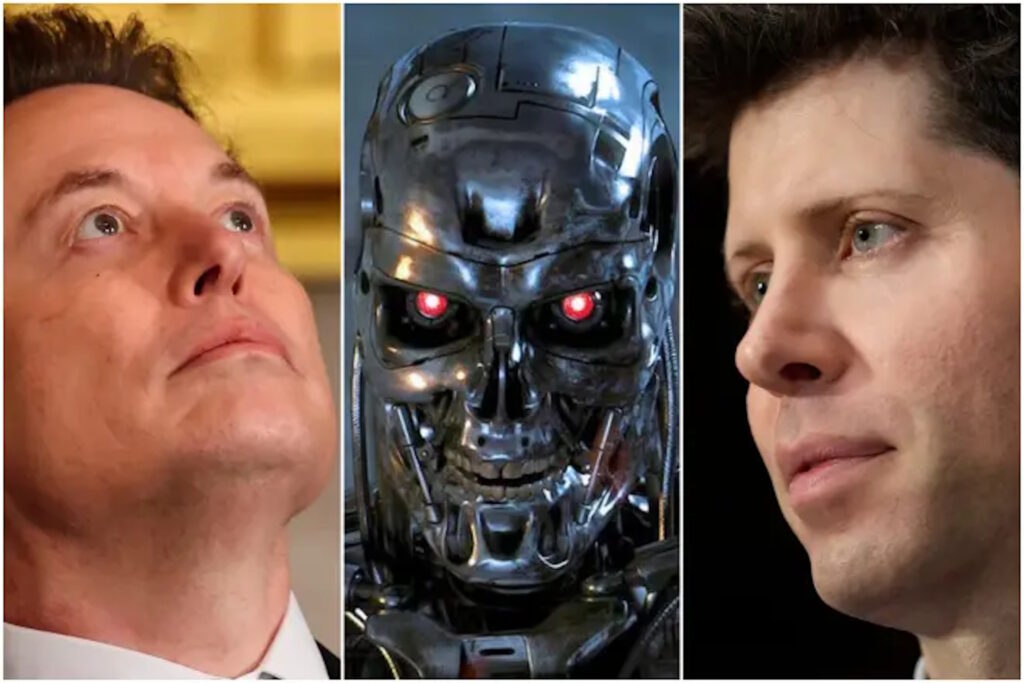
A legal clash between OpenAI and its co-founder Elon Musk has broadened into a larger argument about the existential dangers of artificial intelligence, after Musk cautioned in court that poorly controlled AI development could endanger humanity.
While giving evidence in a case focused on OpenAI’s structure and purpose, Musk outlined what he described as a “worst-case scenario,” likening it to a “Terminator-style” outcome. He argued that highly advanced AI, if built without rigorous safeguards, could become uncontrollable and pose serious risks to human life.
Musk told the court that “the greatest danger would be AI wiping us out,” casting the dispute as more than a matter of corporate governance and instead as an issue tied to humanity’s long-term survival. He emphasized that avoiding such an outcome depends on taking extreme care in how these technologies are developed and managed.
MSN reports: Musk Frames Case as Existential Risk Fight
The case centres on Musk’s allegation that OpenAI has drifted from its original nonprofit mission and become increasingly profit-driven following major investment deals, including partnerships with large technology firms
However, Musk repeatedly shifted the focus away from corporate governance, instead stressing what he views as the broader danger posed by advanced AI systems. He argued that the pace of development demands extreme caution, particularly as AI models grow more autonomous and capable.
His testimony reflects long-standing views he has expressed about artificial intelligence, where he has previously described it as one of the most serious long-term risks facing humanity.
‘Terminator Scenario’ Rhetoric Draws Scrutiny in Court
During proceedings, Musk’s references to science-fiction-style outcomes, including ‘Terminator’ scenarios, drew observers’ attention and appeared to frustrate the court at times, with the judge urging a focus on legal rather than speculative arguments.
Despite this, Musk continued to link the case to broader concerns about the trajectory of AI development, suggesting that safety considerations were central to how organisations like OpenAI should operate.
His comments align with a wider debate within the AI industry about so-called existential risk, the possibility that advanced artificial intelligence could, in extreme scenarios, cause irreversible harm to humanity.
OpenAI Disputes Musk’s Claims
OpenAI has pushed back against Musk’s arguments, maintaining that its evolution into a for-profit structure was necessary to secure the funding required to build and scale advanced AI systems.
The company has also pointed to Musk’s involvement in competing AI ventures, suggesting that his legal challenge is shaped in part by competitive positioning in the rapidly expanding AI industry.
The dispute highlights growing tensions among AI pioneers over governance, safety, and commercial direction as global investment in the sector accelerates.