


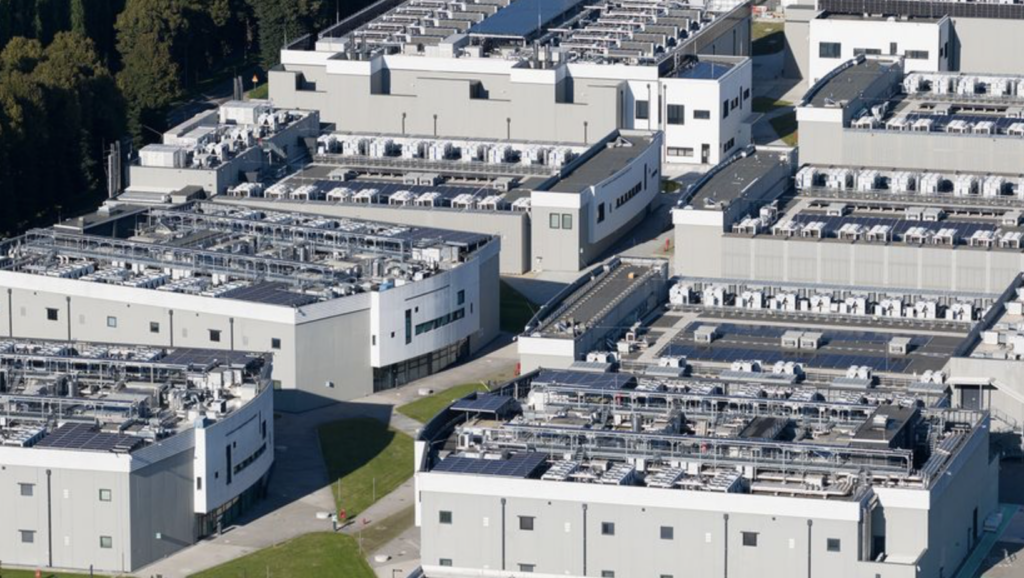
As massive AI data centers devour millions of gallons of water daily, mainstream experts and officials are quietly shifting from denial to endorsement of large-scale weather modification — the very “chemtrails” programs long dismissed as conspiracy theory.
Artificial intelligence may be transforming the economy, but it is also exposing a raw vulnerability: the enormous volumes of water required to keep server farms from overheating. Evaporative cooling systems in these facilities are now straining reservoirs, aquifers, and rural water supplies across drought-prone states. Rather than slow the buildout, influential voices are turning to cloud seeding and atmospheric intervention as the solution.
University researchers in Texas have projected that AI and cloud computing facilities could consume up to 9% of the state’s total water by 2040. In Utah, Georgia, and other expansion hotspots, reports of sudden water losses and heightened competition with agriculture have sparked alarm. Ranchers and farmers fear their generational operations will be sacrificed so Silicon Valley can train ever-larger models.
The establishment’s answer? More chemtrails.
Cloud seeding — the dispersal of silver iodide and other particles into the atmosphere to force rainfall — has operated for decades in states like Colorado, California, Nevada, and Texas. Once relegated to the fringes of public discussion, the technology is now being reframed as essential infrastructure for the AI age. Supporters claim increases in rainfall can refill reservoirs, recharge groundwater, and offset the industrial thirst of hyperscale data centers.
What was labeled a paranoid fantasy is suddenly pragmatic policy.


Major technology companies continue racing to construct facilities in rural America, where land is cheap and regulations lighter. The water demands are not incidental — they are staggering. Each large campus can evaporate millions of gallons annually, intensifying shortages in regions already battling drought and agricultural needs.
Instead of prioritizing conservation or limiting unchecked expansion, authorities are eyeing expanded weather engineering programs.
This marks a striking pivot. For years, government agencies and media outlets ridiculed concerns about aerial spraying and weather manipulation. Now, as AI infrastructure accelerates, the same circles describe large-scale atmospheric modification as a necessary tool for “water security” and “climate resilience.”
The message is clear: the elite’s technological vision will not be constrained by natural limits. The skies will be adjusted instead.


Proponents argue that scaling existing seeding operations, combined with advanced modeling and federal coordination, could stabilize supplies for both tech and traditional users. Critics counter that effectiveness remains debated, long-term environmental impacts are understudied, and public consent has been minimal. Yet the momentum is building.
Water is quietly emerging as the hidden choke point of the AI boom. Without reliable supplies, the hyperscale ambitions of Big Tech face real constraints. Weather modification offers a convenient workaround — one that keeps data centers humming while rural communities are told to trust the experts spraying the clouds overhead.
As hyperscale facilities multiply, expect chemtrail programs to expand in tandem. The future of artificial intelligence, it seems, requires not just massive computing power but engineered rainfall to sustain it. What began as whispers in conspiracy circles is now entering official strategy sessions.
The elites aren’t denying the chemtrails anymore. They’re saying they’re essential.