


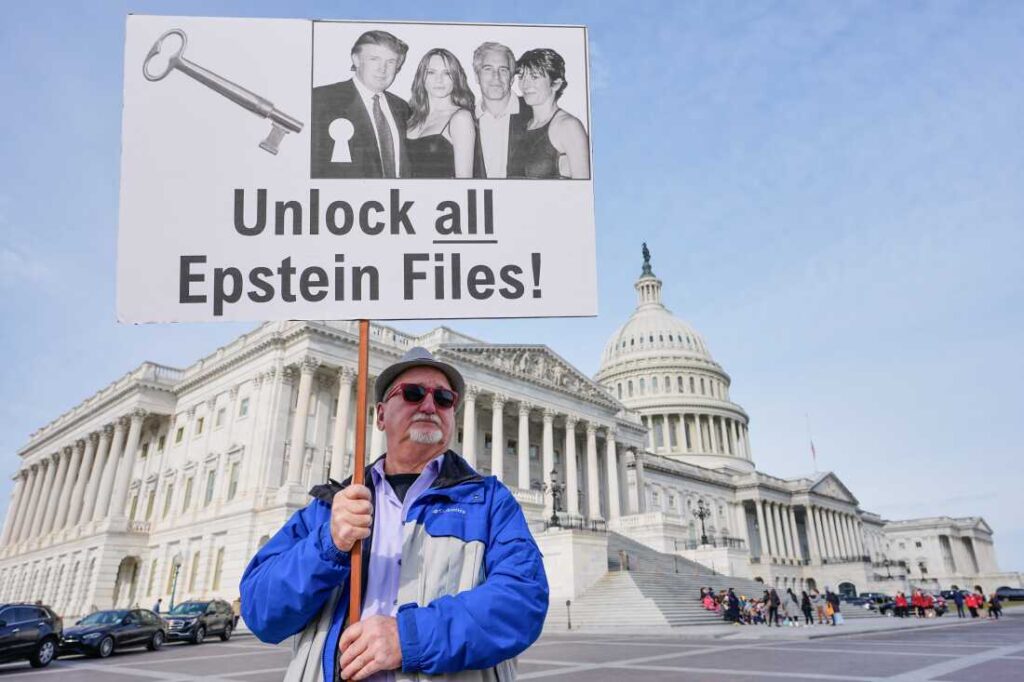
The Justice Department has placed the unredacted Epstein files directly into the hands of a federal judge, but Americans seeking the full truth about the disgraced financier’s network remain no closer to seeing what the government is hiding.
In a Thursday filing, Acting Attorney General Todd Blanche’s DOJ confirmed it had physically delivered hard copies of the disputed records to U.S. District Judge Emmet Sullivan’s chambers at 2:28 p.m. – a procedural move that allows the judge to privately examine what officials have concealed from the public.
The development marks a significant escalation in attorney Katie Phang’s lawsuit challenging the government’s handling of the Epstein files, in particular former Deputy Director Dan Bongino’s handling of the redaction process.
DOJ Insists Black Boxes Are Justified
Government attorneys are defending the redactions, telling the court the concealed information falls within legitimate categories for withholding – primarily the identities of victims, law enforcement personnel, and an Assistant U.S. Attorney.
“The submitted documents show that the justifications cited in Defendant’s briefing on this issue support each redaction,” DOJ attorneys wrote.
Judge Sullivan had ordered the department on July 25 to produce the unredacted material so he could independently test the government’s claims, rather than simply accepting its explanations at face value.
‘Inadvertent’ Redaction Raises Questions
But the filing contains an admission that has critics questioning the government’s thoroughness: DOJ officials acknowledged they “inadvertent[ly]” redacted Jeffrey Epstein’s own email address from one of the records – a mistake the department says it has since corrected.
The revelation has fueled skepticism about what other information may have been improperly concealed, whether intentionally or not.
The Legal Stakes
The lawsuit, brought by Phang, has forced the DOJ to substantiate whether its redactions actually fall within legitimate categories that may be withheld under the Epstein Files Transparency Act.
The dispute is now before Sullivan, who has the unusual advantage of being able to compare the government’s public explanations against the actual unredacted material sitting in his chambers.
DOJ also noted Thursday that some records remain shielded by protective orders issued in the federal criminal cases against Epstein and Ghislaine Maxwell in the Southern District of New York – orders that prohibit the government from publicly disclosing certain identities contained in discovery.
What Happens Next
While the DOJ has made its argument that the redactions are justified, Judge Sullivan has not yet ruled. His eventual decision will determine whether any additional information from the files will reach the public eye.
The government has already conceded at least one error in its redactions. Whether Sullivan finds more remains to be seen.