


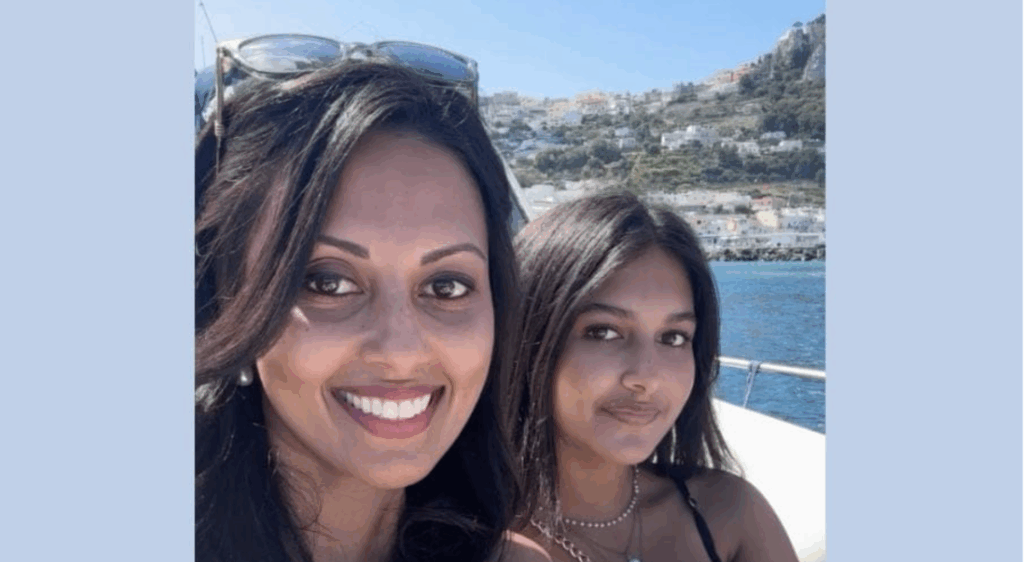
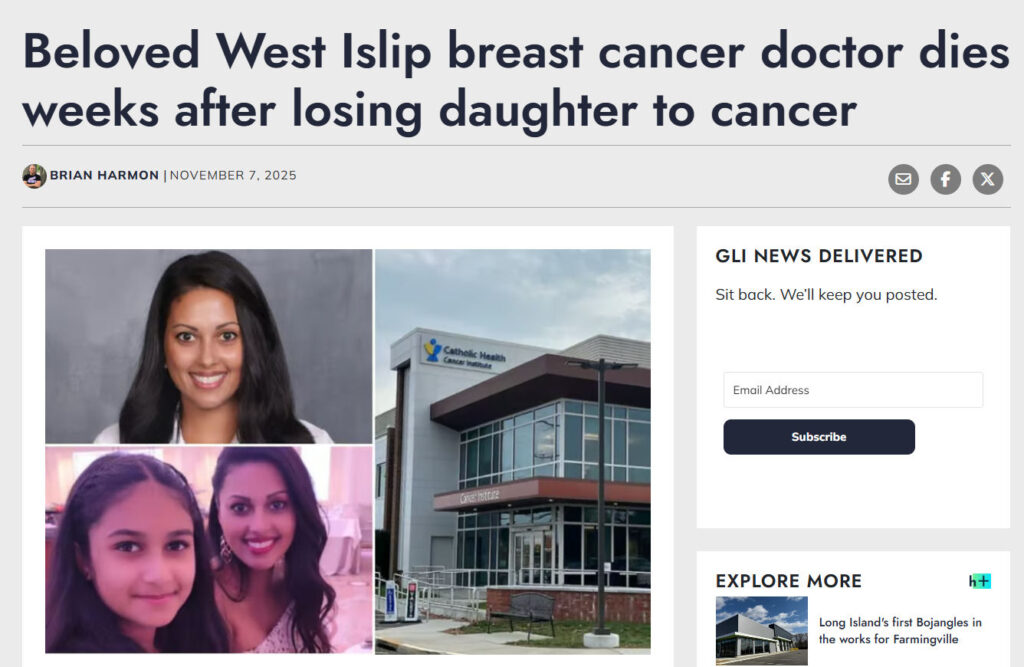
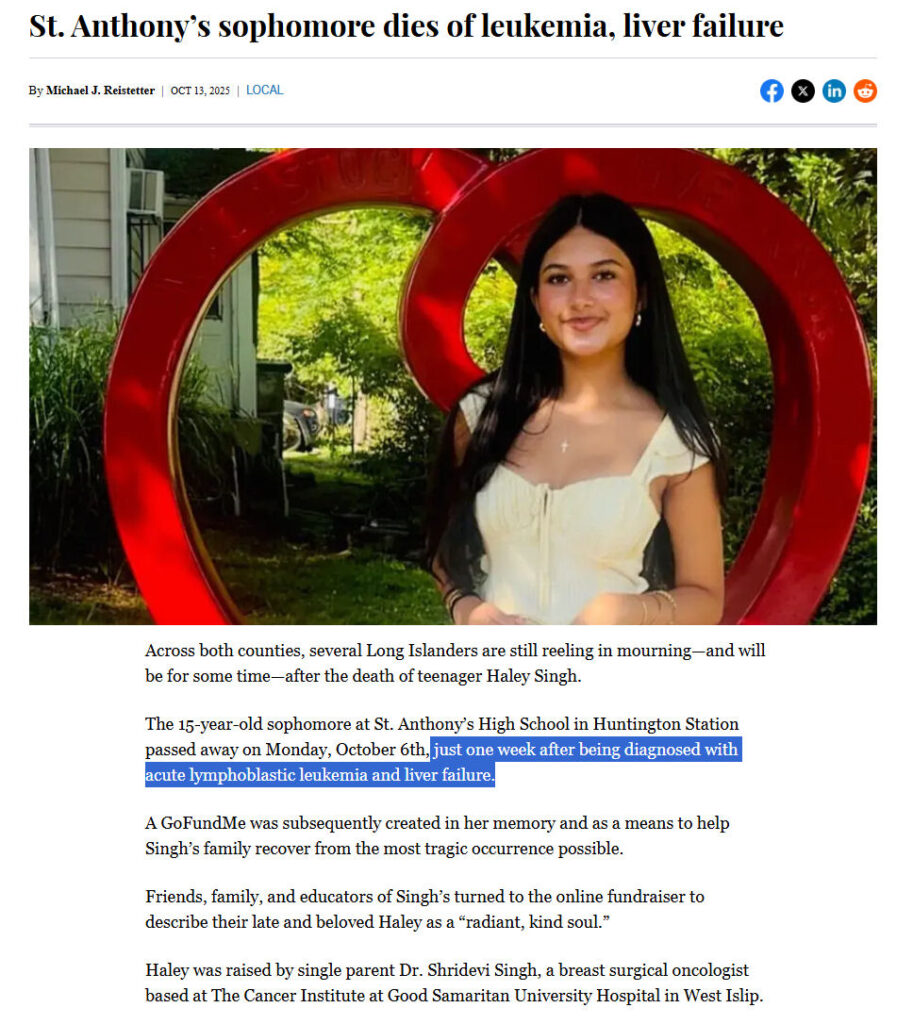
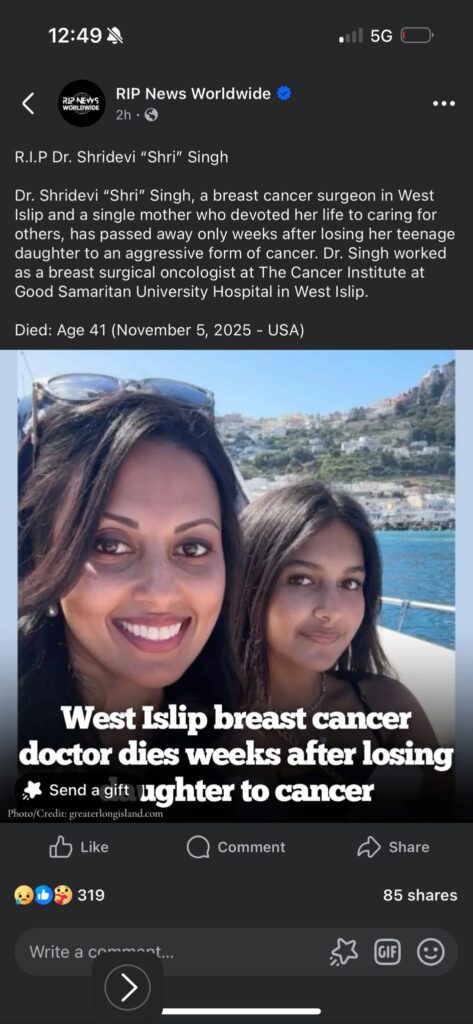
Dr. Shridevi Singh, a 41-year-old breast cancer surgeon, died suddenly on November 5, 2025—just weeks after her 15-year-old daughter Haley passed away from an incredibly aggressive case of Acute Lymphoblastic Leukemia.
Haley was diagnosed and died just one week later, on October 6, following rapid liver failure. The speed of her decline stunned experienced cancer specialists. Then, in a devastating blow, her mother—young, healthy, accomplished, and respected—also died without warning.
In an age where sudden deaths and lightning-fast turbo cancers are increasingly part of the public conversation, many are wondering how two seemingly inexplicable deaths could strike the same heavily vaccinated family within a single month.


Inside modern hospital culture—especially in oncology—doctors like Dr. Singh are expected to follow every COVID-19 vaccination and booster guideline without hesitation.
Frontline physicians stay fully up-to-date, often receiving every available booster as part of the institutional norm, and many assume the same medical path is safe for their children.
In any other era, two sudden and unexplained deaths in the same family would spark a thorough forensic investigation. Today, even suggesting that seems taboo.
Why? Real scientific inquiry would examine all possibilities: environmental exposures, toxicology, immune reactions, unusual biological activity, and the newer medical technologies that still lack long-term study.
These aren’t extreme demands—they’re basic steps toward understanding what happened.

The deeper issue is why these investigations aren’t being done, and why asking for them is treated as controversial. If everything is as safe and transparent as officials insist, open inquiry should confirm it.
Instead, grieving families get silence, the media gaslights the public, and the public gets confusion.
We can’t pretend tragedies like this don’t matter. Whether the cause is medical, environmental, genetic, or something else entirely, two sudden deaths in one household demand answers.
Ignoring them doesn’t protect science; it destroys trust in it.