


More than 250,000 white British girls were raped, sexually exploited, or abused by Pakistani Muslim grooming gangs while police, local authorities, and other government agencies repeatedly failed to protect them, according to an inquiry led by British MP Rupert Lowe.
The report, published on June 16, represents one of the most extensive non-governmental efforts to document what it describes as a systematic, nationwide pattern of child sexual exploitation and institutional cover-up. Unlike official government investigations, Lowe’s inquiry received no taxpayer funding. Instead, it was financed entirely through grassroots donations, raising more than £790,000 from roughly 24,000 supporters.
That funding model gave the investigation a degree of independence from the political establishment, but it also came with significant limitations. Because it was not a statutory inquiry, investigators lacked the legal authority to compel witness testimony, subpoena documents, or require public bodies to cooperate.
Despite those limitations, the inquiry gathered survivor testimony that is difficult to read and harder to ignore. One survivor reportedly described being raped by approximately 600 to 700 different men over a three-year period.
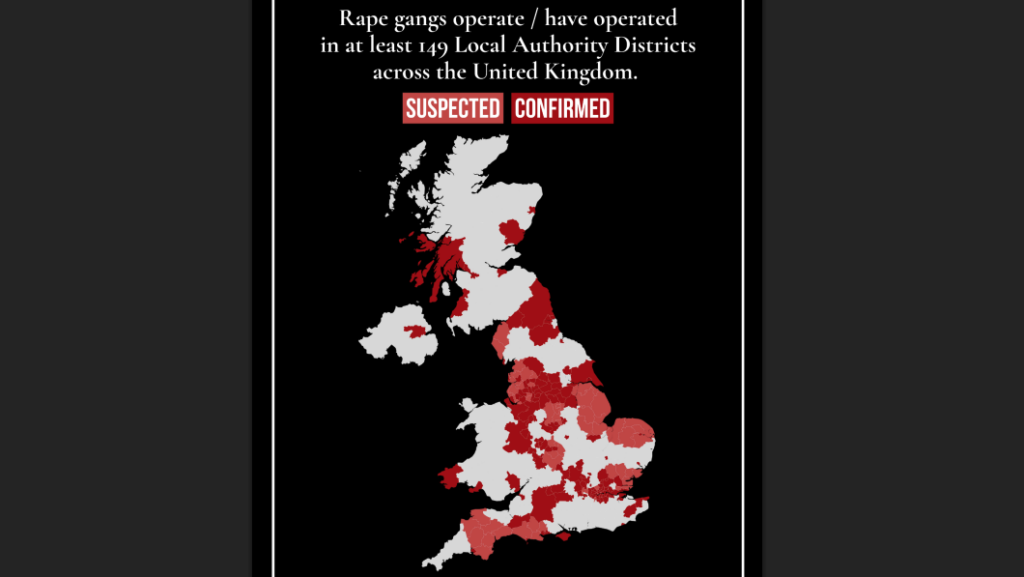
The report identified group-based child sexual exploitation occurring in at least 85 local authority areas across the UK, with evidence suggesting the true number could extend to as many as 149 districts.

Institutional failure at every level
The inquiry alleges that police forces, social services, and local councils repeatedly failed to protect vulnerable children despite clear warning signs. It argues that fears of being accused of racism, coupled with concerns about community relations, created a culture of inaction that allowed organized abuse to continue for years.
The report points to the 2014 Jay Report in Rotherham, which found that at least 1,400 children were sexually exploited between 1997 and 2013 while authorities failed to intervene effectively. According to Lowe’s inquiry, Rotherham was not an isolated scandal but part of a nationwide pattern that was replicated across dozens of towns and cities.
The inquiry is also critical of previous government investigations, arguing they failed to fully acknowledge the scale of the abuse and the institutional failures that enabled it. Those conclusions have placed the report at odds with the government’s own handling of the grooming gang scandal.
The political context
The report landed amid renewed parliamentary debate over how Britain should respond to the grooming gang scandal. Lowe used his position as an MP to bring the inquiry’s findings into the national spotlight, while its crowdfunding success highlighted a broader public frustration. More than 24,000 people contributed to the investigation, reflecting a belief among many supporters that existing institutions had failed to fully address the issue.
The findings are particularly sensitive because they identify a recurring pattern in which the victims were predominantly white British girls and many perpetrators were of Pakistani Muslim background. Supporters of the inquiry argue that acknowledging those demographic trends is necessary to understand how the abuse occurred and why authorities failed to stop it. Critics, however, warn that such framing risks unfairly stigmatizing entire communities and inflaming social tensions.
The debate over the report therefore extends beyond the crimes themselves, touching on wider questions of public trust, institutional accountability, immigration, integration, and the limits of political sensitivity when confronting uncomfortable facts.