


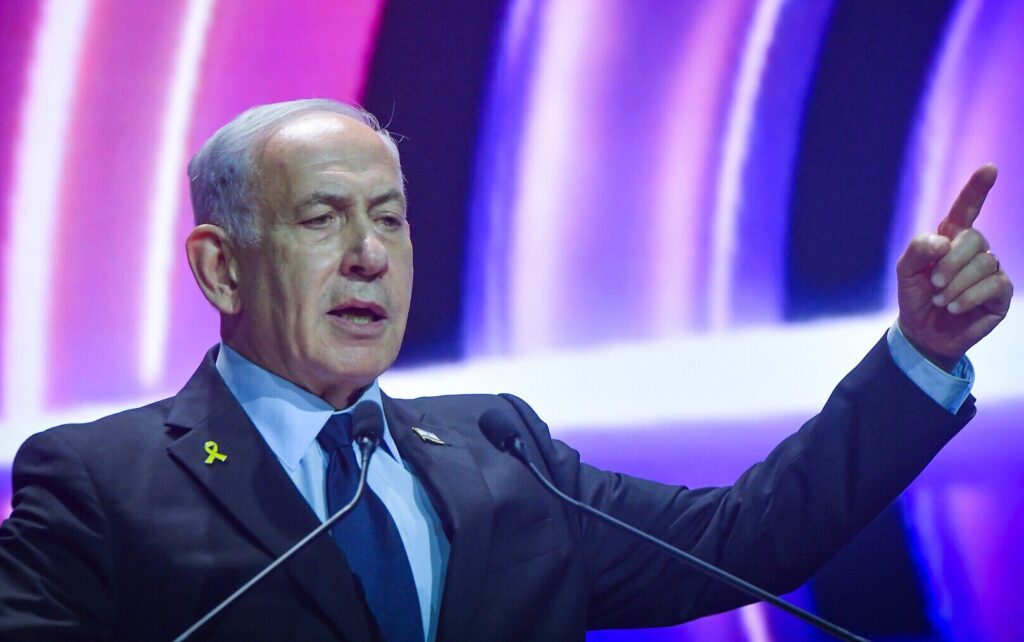
Israeli Prime Minister Benjamin Netanyahu issued an extraordinary two-minute protest today denying that Israel had any involvement in the assassination of American political activist Charlie Kirk.
The highly charged statement, delivered with unusual emotion and urgency, is already being described as unprecedented behavior for a world leader confronted with rumors about the killing of a U.S. citizen.
Netanyahu lashed out at the allegations, calling them a “monstrous big lie,” “insane,” “false,” and “outrageous.” He went beyond a simple denial, emphasizing his personal connection with Kirk by referencing a recent letter of support and noting that he had invited him to Israel only weeks before his death.
However, Netanyahu didn’t mention that Kirk refused the invitation and also rejected his approach to provide Turning Point USA with funding to the tune of hundreds of millions of dollars—if Kirk changed his critical stance on Israel’s recent actions.
Yet it is precisely the intensity and strangeness of Netanyahu’s denial that has fueled suspicion. Leaders rarely respond so quickly or so personally to conspiracy theories, let alone in the immediate aftermath of a high-profile American assassination.
Instead of calming speculation, Netanyahu’s combative tone has raised questions about why he feels so threatened by the narrative and what may lie beneath the surface.


The episode has also revived scrutiny of Netanyahu’s controversial remarks after the September 11 attacks. On the night of 9/11, when asked about the impact on U.S.-Israel relations, he famously replied, “It’s very good,” before quickly revising his words: “Well, not very good, but it will generate immediate sympathy.”
Years later, in 2008, he was quoted in the Israeli newspaper Ma’ariv saying Israel had “benefited from one thing, and that is the attack on the Twin Towers and Pentagon, and the American struggle in Iraq,” adding that these events had “swung American public opinion in our favor.”
Those statements, widely criticized as opportunistic, cast a long shadow over Netanyahu’s latest intervention. To some, his heated denial over Kirk feels less like routine statesmanship and more like damage control—a continuation of a pattern in which tragedies involving Americans are quickly reframed in terms of Israeli interests.