


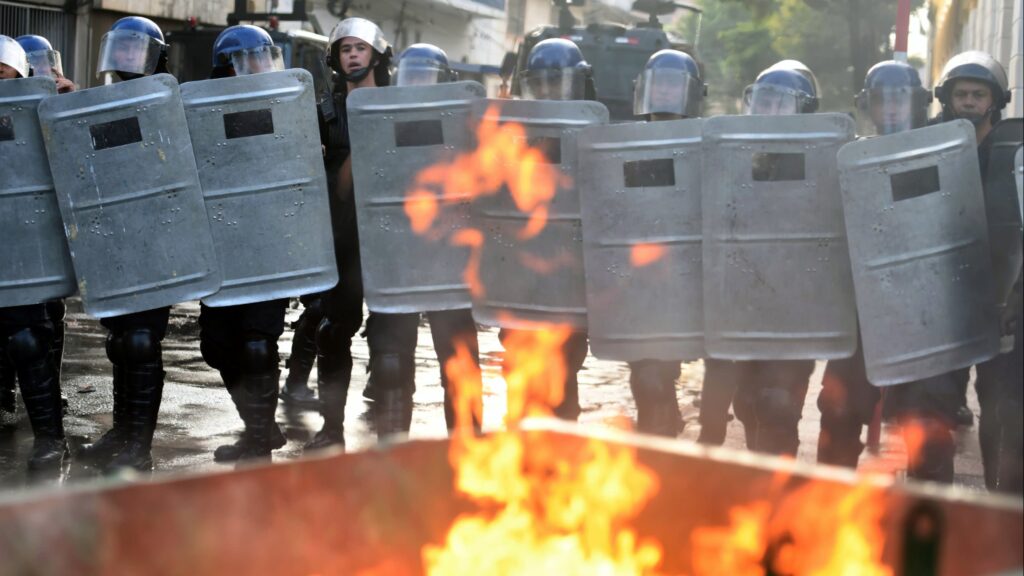
A cascading financial emergency in Paraguay is raising alarm bells across global markets this week, as the government’s sudden shutdown of the nation’s largest bank has frozen the accounts of millions of customers — about 60% of the population — and ignited street protests demanding the president’s removal.
The crisis at Ueno Bank, which erupted with little public warning, is being closely watched by international financial authorities as a potential flashpoint in what analysts describe as an increasingly fragile global banking system, already strained by contagion fears, currency volatility and political instability across the world.
Salaries, Pensions and Savings Frozen
The Central Bank of Paraguay ordered Ueno Bank closed, leaving customers without access to mobile banking, debit and credit cards, or ATMs. Salaries, pensions and personal savings remain frozen. An estimated $380 million belonging to the state pension fund is trapped inside the institution.
For ordinary Paraguayans, the timing has been brutal — coming just as the country was emerging from the economic aftershocks of the COVID-19 pandemic.
“Covid locked people inside their homes,” said one Asunción resident among hundreds gathered outside the bank’s headquarters. “This locked them out of their own money.”
Political Firestorm Erupts Within 24 Hours
The banking collapse rapidly spiraled into a political crisis involving President Santiago Peña, a right-wing ally of Argentine President Javier Milei and Chilean conservative leader José Antonio Kast.
Peña was a shareholder in Ueno’s holding company until 2025, according to public records. The man he appointed to lead the central bank in 2023 previously ran Ueno.
In a span of 24 hours:
- The central bank chief signed his resignation after Peña requested it
- Ueno’s CEO turned himself in to police, with five additional executives detained
- Crowds converged on central Asunción demanding Peña’s exit
- Opposition lawmakers launched efforts to impeach the president
Echoes of 1995 Banking Collapse
The unfolding crisis has revived painful historical memory. When Paraguay’s banking system last broke in 1995, more than half of the country’s banks failed.
Whether Ueno’s collapse remains contained — or becomes the first domino in a broader regional banking crisis — may depend on how quickly authorities can restore depositor confidence and whether the political upheaval undermines the central bank’s ability to respond.
For the 3 million Paraguayans locked out of their accounts, the answer cannot come soon enough.