


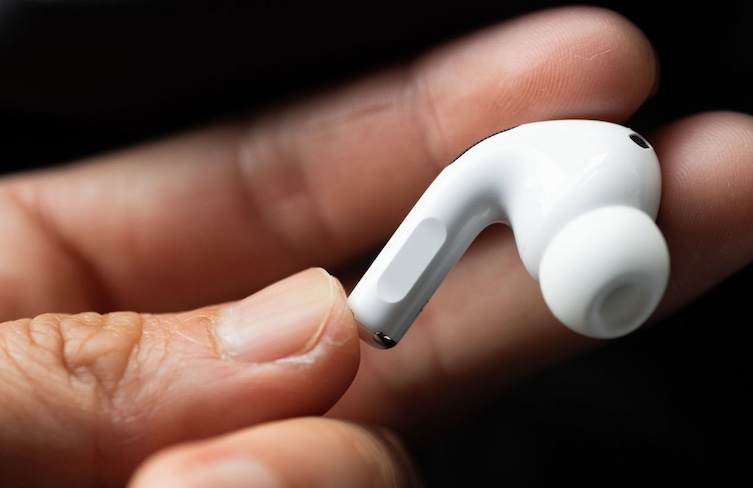
Apple has filed a patent that could enable its popular earbuds — like future versions of AirPods — to monitor and record users’ brain waves, without consent.
The patent in question, US20230225659A1, published by the U.S. Patent and Trademark Office in July 2023, describes a “biosignal sensing device using dynamic selection of electrodes.”
How It Works: Earbuds That Double as Brain Monitors
Traditional brain activity monitoring relies on electrodes placed on the scalp, often visible and cumbersome. Apple’s innovation shifts this to the ear: electrodes positioned inside or around the outer ear for discreet, comfortable wear.


The patent explains: “Brain activity can be monitored using electrodes placed on the scalp of a user. The electrodes may in some cases be placed inside or around the outer ear of the user.” This approach offers key advantages, such as “reduced device mobility and decreased visibility of the electrodes” compared to head-mounted devices.
At the heart of the technology is ear electroencephalography (ear-EEG), a method for accurately measuring electrical brain activity through in-ear sensors. The earbuds would dynamically select the best electrodes for optimal readings, adapting to the user’s unique ear shape without needing custom fittings.
Beyond brain waves, the device could track a range of biosignals:
- EEG (electroencephalography): Electrical brain activity
- EMG (electromyography): Muscle movements
- EOG (electrooculography): Eye movements
- Additional metrics like heart rate, skin conductance, and more
Imagine popping in your earbuds for a workout or commute, unknowingly granting Apple access to real-time data on your neural activity, focus levels, stress, or even emotional states.


The Privacy Nightmare: Reading Your Mind Without Asking
Once you insert these earbuds, the monitoring could begin seamlessly — no additional permission required beyond the initial setup. The patent emphasizes convenience and invisibility, meaning users might not even realize their brain waves are being recorded and potentially transmitted to Apple’s ecosystem.
Critics have raised alarms about the implications:
- Brain data is among the most intimate information possible, revealing thoughts, emotions, and health conditions.
- Without robust, granular consent mechanisms, this could enable constant surveillance of mental states.
- Potential misuse includes targeted advertising based on mood detection, data sharing with third parties, or even unintended leaks of highly sensitive neural information.
While Apple has not commented on plans to implement this technology, the patent’s existence signals a future where everyday wearables cross into direct brain interfacing — all under the guise of health tracking or enhanced features.
