


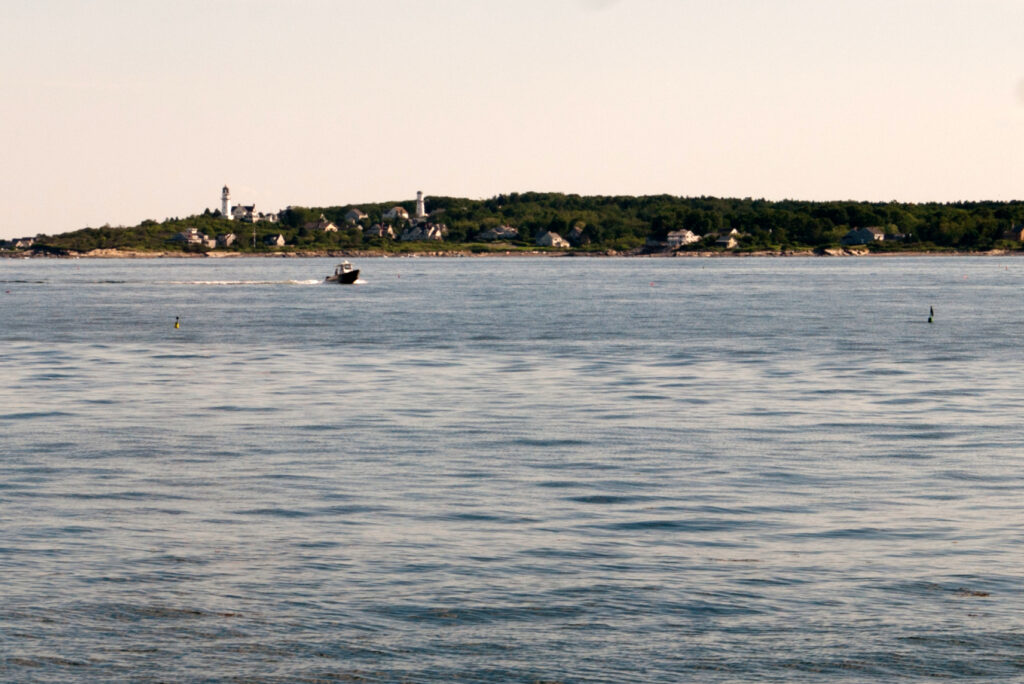
A controversial geoengineering project has seen scientists pump 65,000 liters of chemicals into the ocean off the Massachusetts coast… to stop global warming
In August 2025, 65,000 liters of sodium hydroxide, a highly alkaline, caustic substance, was dumped into the Gulf of Maine, yet this wasn’t considered to be an industrial disaster.
Instead, scientists claimed that the controversial geoengineering experiment could be a step towards help slowing down ‘climate change’.
Researchers argue that boosting ocean alkalinity could suck more CO2 from the atmosphere, turning it into harmless baking soda.
The potential effects that this might have on marine life however, remains uncertain.
The Daily Mail reports: The oceans already hold around 38,000 billion tonnes of CO2, trapped as dissolved sodium bicarbonate, or baking soda.
The geoengineering method known as Ocean Alkalinity Enhancement (OAE) aims to speed up this natural process by resetting the ocean’s pH.
Over four days, scientists added vast quantities of sodium hydroxide – an alkaline chemical tagged with a red dye – to the waters off the coast of Boston.
Making the ocean more alkaline should encourage it to absorb even more CO2 from the atmosphere.
However, critics have warned that the potential effects on marine life remain uncertain.
Gareth Cunningham, Director of Conservation and Policy at the Marine Conservation Society, told the Daily Mail: “These approaches are resource-intensive and their ecological impacts are still poorly understood.”
For years, scientists have put forward OAE as one of the leading potential solutions to climate change.
In theory, the novel approach could solve two problems at once by locking away excess CO2 from the atmosphere and fixing the oceans’ rising acidity.
Without an ‘antacid’ like sodium hydroxide to react with, CO2 dissolving in the oceans forms a mild acid that has slowly but surely reduced the pH level.
This is already having catastrophic effects on sea life, as the acid dissolves marine creatures’ shells, damages coral, and even wears away sharks’ teeth.
The LOC-NESS (Locking Ocean Carbon in the Northeast Shelf and Slope) project is the first large-scale experiment to test the impact of OAE in an open water setting.
With approval from the US Environmental Protection Agency and engagement with local fishermen, scientists from the Woods Hole Oceanographic Institution poured alkaline chemicals into the ocean 50 miles (80 km) off the Massachusetts coast.
They then used cutting-edge technology, including autonomous gliders, long-range autonomous underwater vehicles and shipboard sensors to track the spreading chemicals.
Over the next few days, the scientists measured 10 tonnes of carbon entering the water as the pH increased from 7.95 to 8.3 – matching pre-industrial levels.
In the best-case scenario, the researchers estimate that the sodium hydroxide would absorb about 50 tonnes of carbon over the next year, equivalent to the average yearly emissions of five UK citizens.