


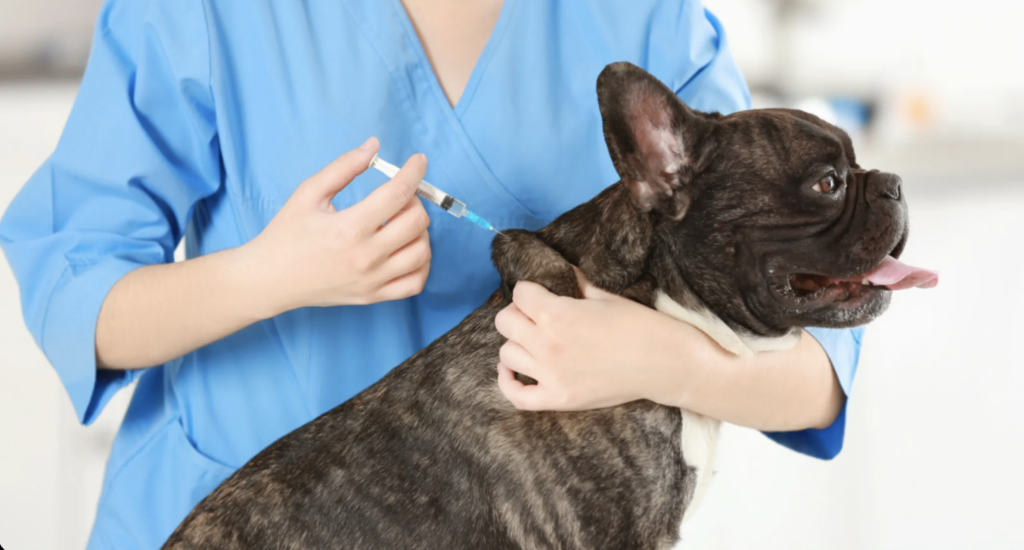
Merck has begun nationwide distribution of its new self-amplifying mRNA rabies vaccine for dogs and cats, even as FOIA records on Merck’s self-amplifying RNA vaccine for canine influenza detail cases of dogs collapsing and dying within minutes of injection.
In November 2026, Merck officially announced its U.S. launch of NOBIVAC NXT 1-Rabies and NOBIVAC NXT 3-Rabies. These are marketed as “next-generation,” non-adjuvanted, 0.5 mL vaccines for healthy dogs and cats 12 weeks and older, with one-year or three-year duration claims after the booster.
Unlike traditional killed-virus rabies vaccines used for decades, this product is built on Merck’s RNA-particle platform. It delivers genetically engineered self-amplifying RNA into the animal’s cells.
The RNA is designed to make multiple copies of itself for a period of time inside dendritic cells, driving production of rabies virus glycoprotein (the antigen).
Company materials and supporting descriptions call this “RNA particle technology” or self-amplifying RNA that unpacks and amplifies the gene of interest before translation into antigen.
This is a fundamental shift: instead of presenting inactivated virus, the shot programs the pet’s own cells to manufacture the viral protein. Questions remain about how long amplification continues in real-world animals, individual variation, and long-term effects of repeated antigen production.


Even more concerning to many pet owners and independent researchers are the post-market signals from Merck’s earlier self-amplifying RNA product in the same platform—the Nobivac NXT Canine Flu H3N2 vaccine.
Over 1,000 pages of FOIA records obtained from USDA adverse-event reports (covering roughly September 2024–July 2025) documented cases in which the RNA vaccine was listed as a suspect product. Reports included:
- Deaths
- Cardiac arrest
- Neurological problems
- Anaphylaxis / hypersensitivity
- Injection-site masses, lumps, panniculitis, or fibrosis (some requiring surgery)
- Collapse and shock
Some dogs reportedly collapsed and died within minutes to a couple of hours of vaccination. While official field-safety summaries cited relatively low rates of mostly mild events in controlled studies, the volume and severity of real-world reports have fueled demands for greater transparency and independent scrutiny.
Merck is now marketing RNA-particle vaccines against three diseases in the United States:
- Rabies — dogs and cats (the newly launched NXT Rabies)
- Influenza H3N2 — dogs
- Feline leukemia — cats
Additional concerns raised by skeptics include the theoretical possibility of self-amplifying RNA or antigen shedding onto human owners through saliva, urine, or other bodily secretions, and the unknown cumulative impact of multiple RNA-particle products on the same animal.

Rabies remains a deadly disease, and vaccination has historically played a major role in protecting both pets and public health. That does not automatically make every new platform risk-free or free from meaningful informed-consent discussion. Pet owners are being told this is simply a safer, more convenient upgrade.
This needs to be stopped—or at minimum subjected to far more rigorous, transparent, long-term safety monitoring and genuine choice for owners—before it becomes the new default nationwide.
Ask your veterinarian exactly which rabies vaccine is in the syringe. Demand the product name and technology. Document everything. Share the FOIA findings and the launch details with other pet owners. The pets cannot consent. Their owners still can.