



Self-replicating mRNA vaccines have received the greenlight from the European Committee for widespread use in Europe, despite alarming clinical trial results that included participant deaths and a staggering 90% reporting side effects.
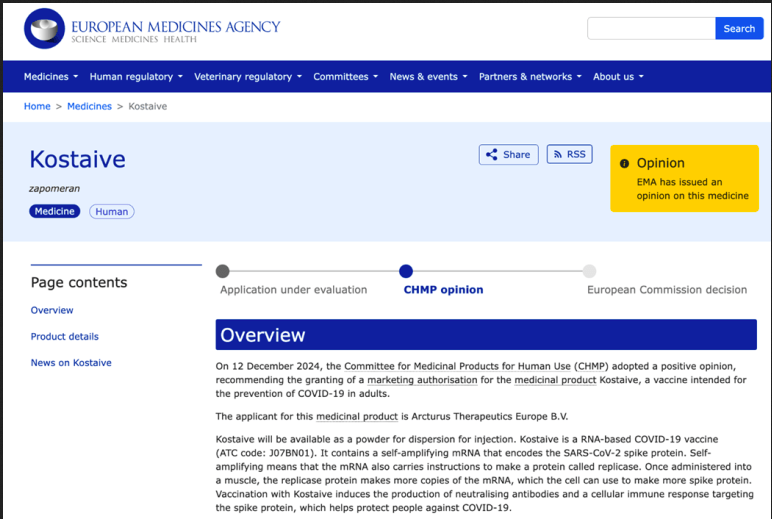
The European Committee for Medicinal Products for Human Use (CHMP) issued a positive opinion recommending marketing authorization for Kostaive, a self-replicating mRNA injection—often referred to as a “replicon” shot—developed by Arcturus Therapeutics.
The final decision now rests with the European Commission, which will determine whether the vaccine will be approved for use across EU nations.
Here’s a visual representation of how these dangerous genetic shots work:

The move to authorize the self-replicating mRNA shots comes despite serious safety concerns and troubling clinical trial results that have sparked global debate.
Japan was the first country to approve Kostaive, granting full regulatory approval for the shot—known there as Kostaive ARCT-154—in November 2023. The Japanese Ministry of Health, Labor, and Welfare (MHLW) pushed forward, even greenlighting an updated booster in September 2024 to target the Omicron JN.1 lineage.
However, the decision came under intense scrutiny after reports revealed significant safety risks during clinical trials.

The clinical trials for Kostaive produced very troubling results:
- Five deaths were reported among participants in the Phase 3b study.
- Across phases 1, 2, and 3a combined, a staggering 90% of participants experienced adverse events.
- Of those, 74.5% reported systemic reactions (such as fever, fatigue, and body aches), while 15.2% required medical attention following the first dose alone.
These numbers paint a concerning picture of the injection’s safety profile, particularly given its experimental nature and lack of long-term safety data.
Adding to the controversy, many of the study authors listed in Kostaive’s trials are full-time employees of Arcturus Therapeutics, raising questions about potential bias and the integrity of the reported findings.
With the European Commission now holding the final say, many are urging regulators to carefully consider the risks before approving a product with such a high rate of reported adverse events and lingering questions over its safety.
Europe stands at a crossroads: will it prioritize rigorous safety standards, or move forward with an experimental injection whose long-term effects remain unknown?
For now, critics argue that the only responsible decision is for the European Commission to REJECT authorisztion of Kostaive—until transparent, independent safety evaluations can provide real answers.
