


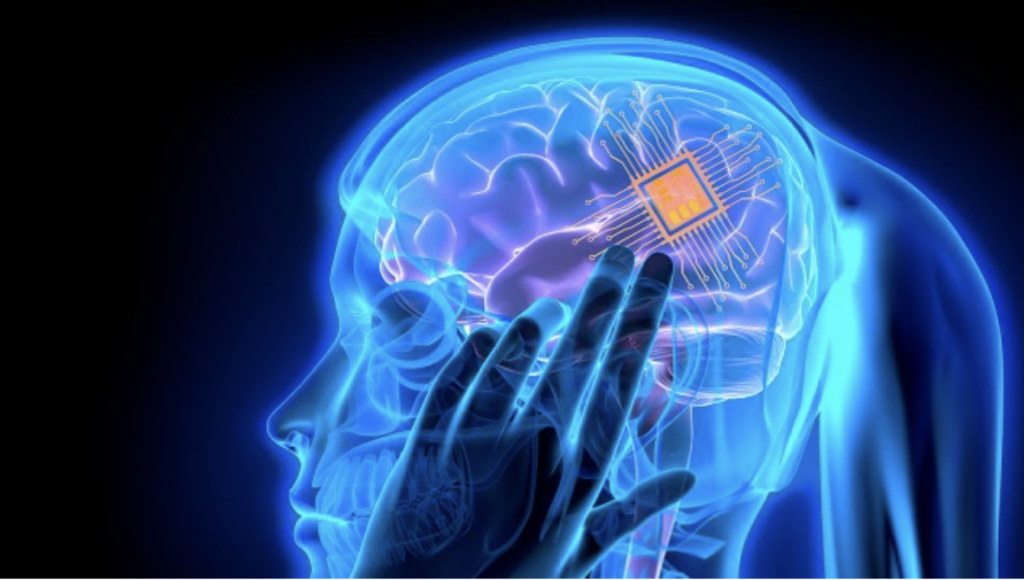
Human beings who refuse to allow Silicon Valley companies to implant a chip in their brain will be “excluded from society” and will not survive the “major transformation” of the coming “human-AI merger,” according to a Silicon Valley CEO.
“Someone you work with will get it first. And you’ll hold out for a while, the way you did with the smartphone. But eventually, you won’t,” said D. Scott Phoenix at TED 2026 in Vancouver last month. “The advantages of integration will be hard to compete with.”
Put bluntly, in his view, “We’re on the cusp of the next major transition, the merger of humans and AI.”

This perspective, as dystopian as it sounds, is commonly held in Silicon Valley. OpenAI CEO Sam Altman mused way back in 2017 that “a merge is probably our best-case scenario” for survival after the emergence of superhuman AI.
Tech billionaire Peter Thiel is also a vocal advocate of “transhumanism.”
Big Tech is investing huge sums of money into the brain chip market, with more to come. The BCI market, currently sitting at around $350 million, is expected to reach $1.2 billion by 2035, according to Future Market Insights.
That doesn’t include companies like the one Phoenix founded, named Vicarious, which sought to use core principles in the brain to build AI that could act like humans.
Phoenix, who is now a venture capitalist, sold his company to Alphabet in 2022, after it was funded to the tune of $250 million by investors including Elon Musk and Mark Zuckerberg.
The broader neurotechnology market is projected to expand to $52 billion by 2032, according to the Neurorights Foundation.
With that much money at stake, not to mention the future of humanity, it should be no surprise that the political battle over our brainwaves is starting to heat up. That’s particularly true amid skepticism on both the left and right toward Silicon Valley’s relentless push for AI growth.