



A major study involving more than 470,000 participants has found that using sunscreen massively increases the risk of three major types of skin cancer.
According to the UK Biobank study, frequent sunscreen users faced a 292% higher risk of invasive melanoma, a 140% higher risk of basal cell carcinoma, and a 126% higher risk of squamous cell carcinoma.
What makes the findings particularly noteworthy is that the elevated risks remained even after researchers adjusted for a wide range of factors known to influence skin cancer risk, including age, sex, skin type, tanning ability, history of sunburns, use of sunlamps, and time spent outdoors.
The researchers observed a consistent pattern: the more often participants reported using sunscreen, the higher their recorded incidence of skin cancer.
The findings have fueled debate on social media, where critics of conventional sun-safety advice argue that modern chemical sunscreens may carry risks that have not been adequately investigated.
Some commentators point to evidence showing that toxic chemical ingredients such as oxybenzone, octocrylene, and homosalate can be absorbed into the bloodstream, raising questions about long-term biological effects.

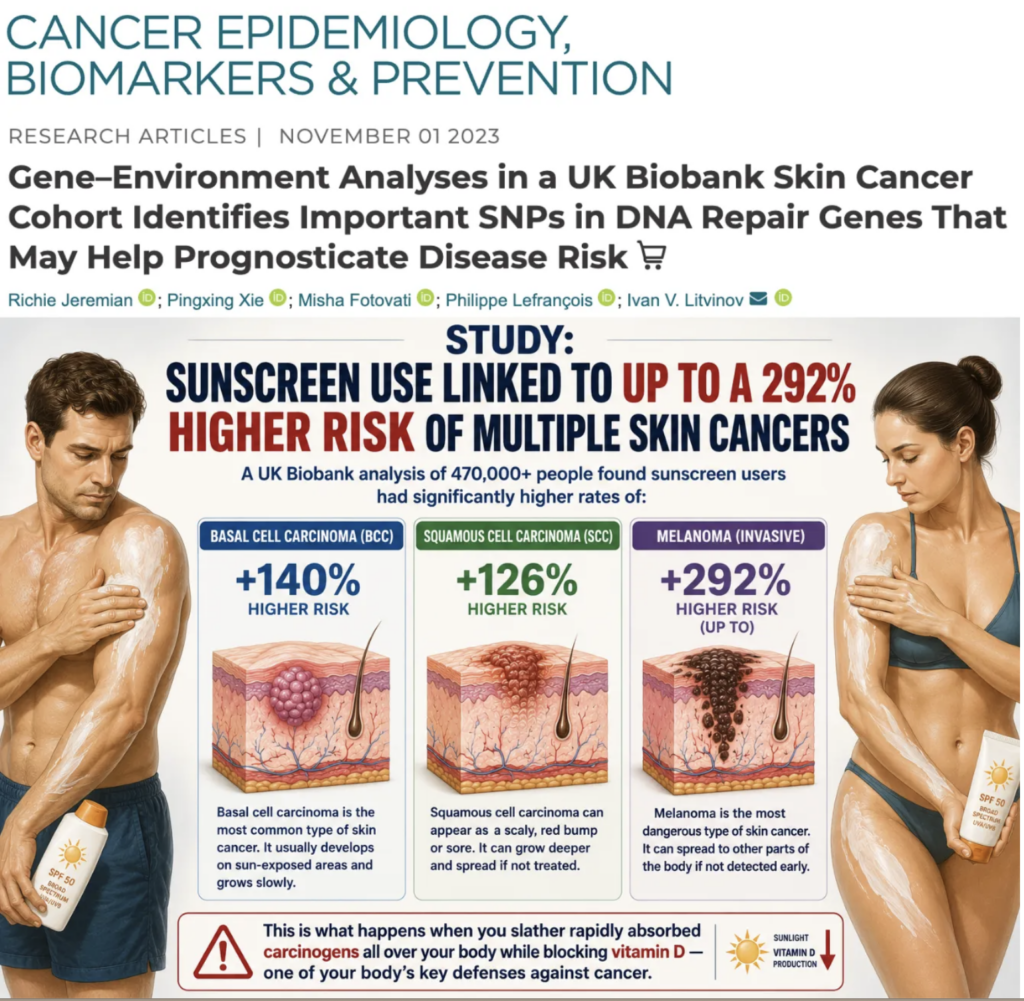
The study also arrives amid growing discussion over vitamin D deficiency. Evidence is emerging that excessive avoidance of sunlight deprives the body of a vital nutrient linked to immune function and overall health.
While vitamin D has been studied extensively for its potential role in cancer prevention, mainstream health authorities continue to recommend sunscreen as part of a broader strategy to reduce harmful ultraviolet exposure.
For now, the study raises a question that many health authorities may find difficult to ignore: if sunscreen is the cornerstone of modern skin-cancer prevention, why are the highest rates of skin cancer appearing among the people who report using it most often?