


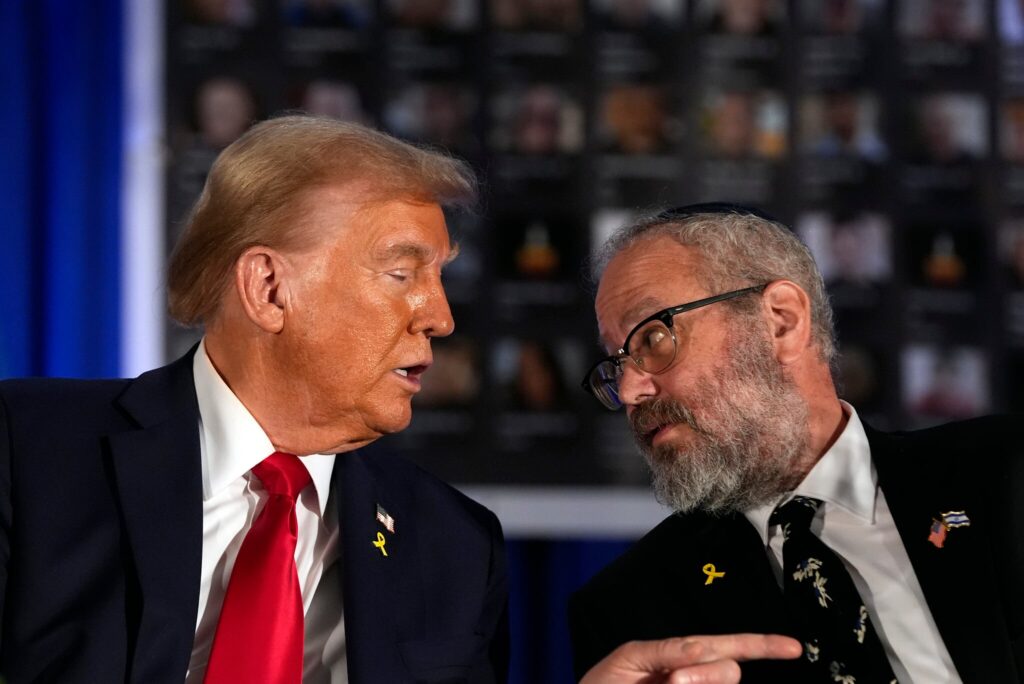
Rabbi Yehuda Kaploun, President Trump’s Israeli-born Chabadnik nominee for U.S. antisemitism special envoy, told Jewish Insider this week that he plans to work with social media companies on their algorithms to suppress “hatred” and label “misinformation” using AI.
Kaploun said inaccurate or inflammatory content about Israel—for example, the idea they are spying on Americans—is spreading unchecked online and wants platforms to use AI tools to flag that content, and eliminate “conspiracy theories” from the internet.
Kaplan’s comments bring to mind the infamous Facebook fact-checking regime—partnered with outlets like Snopes—that systematically throttled free speech online, disproportionately censored conservative voices, and effectively shielded government agencies and Big Pharma from scrutiny while they propagated false COVID narratives, suppressing legitimate debate and dissenting experts at every turn.
This is what Kaplan views as “accurate facts”:
Israel Investing in AI-Driven Narrative Efforts
Independent reporting has documented that the Israeli government has allocated substantial resources toward digital and AI-related campaigns designed to influence global public perception of the war in Gaza and related issues.
According to a Ynet News report, Israel’s Foreign Ministry has launched a roughly $145 million global campaign that enlists U.S. firms, influencers, and AI platforms like ChatGPT to shape pro-Israel narratives online and counter criticism, particularly among young Americans.
Similarly, Responsible Statecraft and other outlets have noted that the Israeli government awarded a $6 million contract to a U.S. firm called Clock Tower X LLC to produce and distribute content tailored to Generation Z across platforms, with the goal of influencing how AI and search engines frame conversations about Israel. At least 80 percent of the content is intended to be tailored for platforms such as TikTok, Instagram, YouTube, and podcasts to help “deliver GPT framing results” in AI outputs.
These efforts are part of a broader hasbara (public diplomacy) strategy that also includes paid advertising campaigns on Google’s platforms aimed at promoting narratives favorable to Israel during the ongoing conflict.
Investigations into advertising data have found that government agencies paid for thousands of ads on Google services that presented narratives about everyday life and normalcy in Gaza in ways that contrasted sharply with reports from independent journalists and humanitarian organizations.