
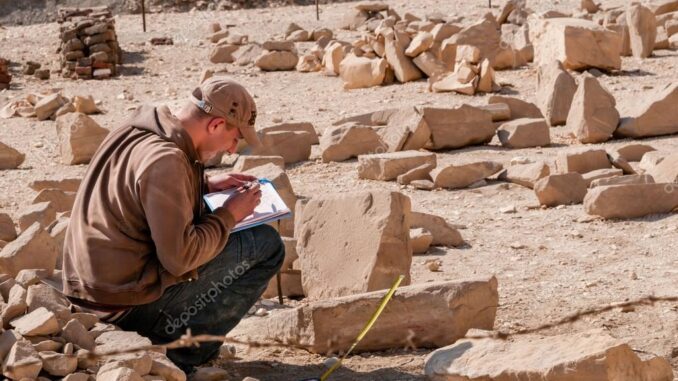
An ancient settlement discovered near Sturgeon Lake in Saskatchewan is forcing archaeologists to rethink everything they thought they knew about the origins of civilization in North America.

Dated to roughly 11,000 years ago — more than 6,000 years older than Egypt’s Great Pyramid according to the accepted timeline — the site contains evidence of permanent or long-term habitation, shattering mainstream historians’ belief that early inhabitants of the region were merely nomadic hunter-gatherers passing through temporary camps.
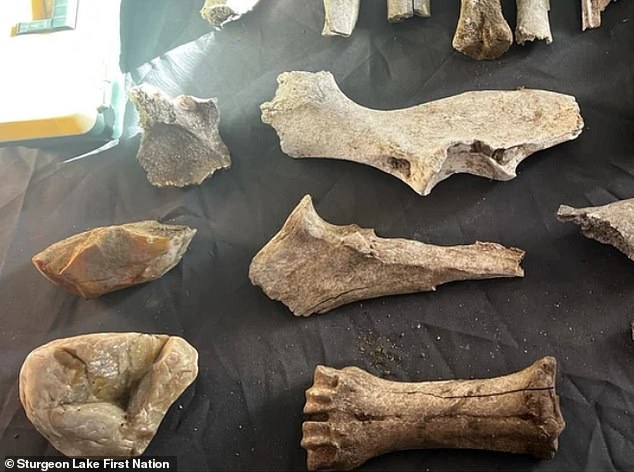
Archaeologists working with Sturgeon Lake First Nation uncovered stone tools, fire pits, toolmaking materials, and remains of the extinct Bison antiquus.

BYPASS THE CENSORS
Sign up to get unfiltered news delivered straight to your inbox.
You can unsubscribe any time. By subscribing you agree to our Terms of Use
Charcoal layers point to controlled fire management, aligning with oral traditions. The findings suggest a sophisticated society with advanced hunting strategies, including buffalo jumps.
Johnny Depp Reveals Freddy Krueger Was Based on Tom Hanks: 'America's Most Prolific Child Killer'
The site, known as Âsowanânihk (“a place to cross” in Cree), lies about five kilometres north of Prince Albert along the North Saskatchewan River. It was first spotted by avocational archaeologist Dave Rondeau through riverbank erosion exposing artifacts.
Rondeau said: “The moment I saw the layers of history peeking through the soil, I felt the weight of generations staring back at me.
“Now that the evidence has proven my first instincts, this site is shaking up everything we thought we knew and could change the narrative of early Indigenous civilizations in North America.”
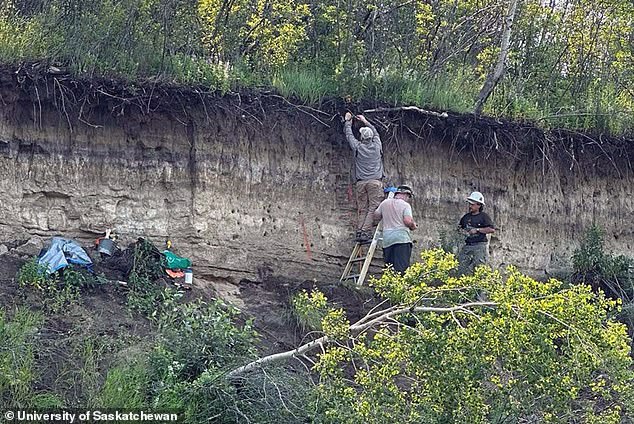
Dr. Glenn Stuart of the University of Saskatchewan added: “This discovery challenges the outdated idea that early Indigenous peoples were solely nomadic.
“The evidence of long-term settlement and land stewardship suggests a deep-rooted presence. It also raises questions about the Bering Strait Theory, supporting oral histories that Indigenous communities have lived here for countless generations.”
Excavations indicate the location served as a hub for organized activity shortly after the last Ice Age. Researchers compare its importance to iconic global sites like the Great Pyramids, Stonehenge, and Göbekli Tepe.
The discovery includes evidence of bison pounds and kill sites, with hunters targeting massive Bison antiquus weighing up to 4,400 pounds. This points to coordinated community efforts and deep environmental knowledge.
Chief Christine Longjohn of Sturgeon Lake First Nation stated: “This discovery is a powerful reminder that our ancestors were here, building, thriving and shaping the land long before history books acknowledged us.
“For too long, our voices have been silenced, but this site speaks for us, proving that our roots run deep and unbroken. It carries the footsteps of our ancestors, their struggles, their triumphs, and their wisdom. Every stone, every artifact is a testament to their strength. We are not just reclaiming history, we are reclaiming our rightful place in it.”
The site, on Treaty 6 territory home to the Plains Cree, faces potential threats from logging and industrial activity. The Âsowanânihk Council, involving Elders, youth, educators, and archaeologists from the University of Saskatchewan and University of Calgary, is leading protection and further study efforts. Plans include a cultural interpretive centre.
Carbon dating of charcoal from a hearth places activity at about 10,700 years ago, roughly 1,000 years earlier than prior estimates for organized settlement in the region.
This find adds physical evidence to oral histories describing the area as a cultural and trade center, highlighting sophisticated land stewardship in post-glacial North America.
The discovery underscores ongoing collaboration between Indigenous communities and researchers to preserve and understand this chapter of human history. Further excavations and funding could yield more insights into early societal organization on the continent.