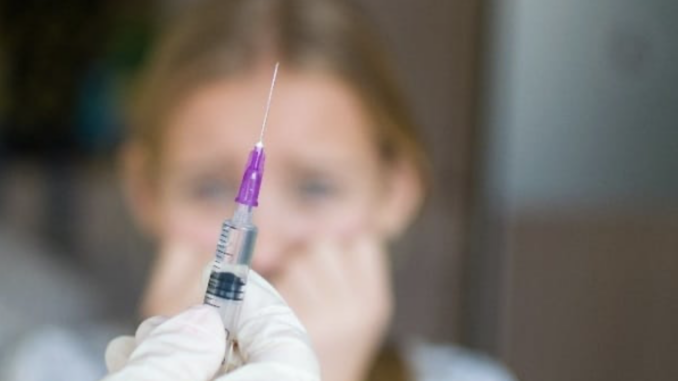
The Netherlands has carried out its first known euthanasia of a child between the ages of one and 12 under controversial regulations that allow doctors to quietly end a child’s life through lethal injection, as Dutch death panels begin deciding which children can live and which must die.

And perhaps most disturbing of all, the public knows almost nothing about the child whose life was ended.
Dutch authorities have refused to disclose the child’s age, sex, medical condition, or the circumstances surrounding the death. The euthanasia reportedly took place in December but was not revealed publicly until June.
BYPASS THE CENSORS
Sign up to get unfiltered news delivered straight to your inbox.
You can unsubscribe any time. By subscribing you agree to our Terms of Use
The secrecy is fueling outrage among critics who argue that a government willing to authorize the killing of children should at least be willing to explain exactly what happened.
Kevin Spacey Releases Proof Ellen DeGeneres 'Butchered' Robin Williams in 'Hollywood Sacrifice'
From Protecting Life to Managing Death
When euthanasia laws were first introduced, citizens were assured they would apply only to the most exceptional circumstances.
That promise has been broken.
The Netherlands widened its euthanasia framework in 2024 to include children between one and 12 years old who are deemed to be suffering unbearably and whose conditions are considered untreatable. Parents must consent, and physicians must conclude that death is expected in the foreseeable future.
Critics argue that this represents a profound shift in the role of the state.
Rather than dedicating all available resources to preserving life, governments are increasingly empowering bureaucrats, review boards, and medical authorities to decide which lives are worth continuing and which are not.
That is a dangerous precedent.
The Slippery Slope Critics Warned About
For years, opponents of assisted dying legislation warned that once society accepts the principle that some lives can be intentionally ended by the state, the categories of eligible people would inevitably expand.
Supporters dismissed those concerns as fearmongering.
Yet euthanasia now accounts for roughly six percent of all deaths in the Netherlands, according to official figures.
What began as a supposedly rare option for competent adults facing imminent death has evolved into a routine part of the healthcare system.
Now it has reached children. The question is no longer whether a slippery slope exists, but how far society is willing to slide.
Echoes of the “Death Panel” Debate
The development has revived concerns raised years ago by critics of centralized healthcare systems and technocratic governance.
Many remember globalist billionaire Bill Gates urging governments to create death panels and place life-and-death decisions in the hands of government-approved experts, review boards, and medical committees.
Today, government death panels are no longer theoretical.
In the Netherlands, euthanasia cases are reviewed by government commissions before being assessed by prosecutors. Supporters describe this as oversight. In reality, it’s much darker: a system in which official panels determine whether ending a human life meets regulatory standards.
It represents a chilling transformation of medicine—from healing the patient to managing population outcomes.
Canada Following the Same Path?
Many observers are now looking toward Canada, where the Medical Assistance in Dying (MAiD) program has undergone repeated expansions since its introduction.
Originally presented as a limited measure for terminally ill adults, the program now accounts for a growing number of deaths each year. Discussions continue regarding further expansions, including eligibility for those suffering solely from mental illness.
The same pattern is emerging: each expansion is presented as a narrow exception, only for new categories to be added later.
Some activists and policymakers have already pointed to European euthanasia models as examples for future reforms.
That should set off alarm bells.
A Civilization at a Crossroads
The first euthanasia of a young child in the Netherlands is more than a legal milestone. It is a moral one. Supporters call it compassion.
In reality, it is a warning.
Society once measured its humanity by how fiercely it protected its weakest members. Now society is ncreasingly measuring it by how efficiently it can play god and end life.
The debate is no longer simply about euthanasia.
It is about whether governments exist to defend life—or whether they are slowly assuming the authority to decide when life is no longer worth living.
That is a power no government should ever possess.