
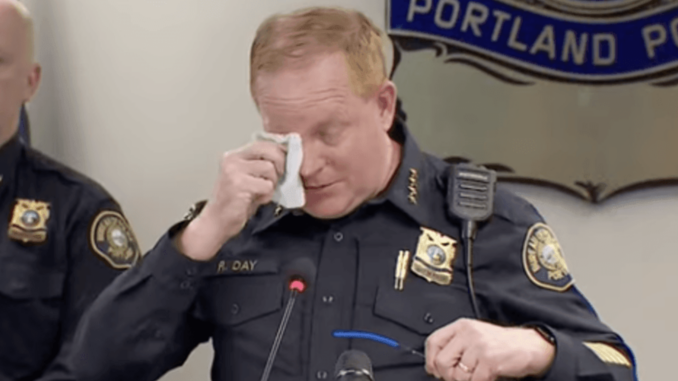
The Portland Police Bureau announced Tuesday that they are unable to enforce the law and protect residents from criminals, following years of anti-police policies, budget cuts to defund the police, and restrictions on standard policing techniques pushed by Portland’s far-left leadership.

The situation has become so severe that residents and business owners are organizing independent community patrols, saying they can no longer rely on authorities to respond quickly when emergencies unfold.
The sense that Portlanders are increasingly “on their own” exploded after a disturbing incident at Tom McCall Waterfront Park. According to reports, a naked man was harassing children while multiple people repeatedly called 911. Despite around a dozen emergency calls, police reportedly took more than 30 minutes to arrive.

BYPASS THE CENSORS
Sign up to get unfiltered news delivered straight to your inbox.
You can unsubscribe any time. By subscribing you agree to our Terms of Use
A deepening staffing crisis inside the Portland Police Bureau has left communities effectively policing themselves, with as few as 41 officers reportedly covering the city at certain times.
Courtney Love Reveals She 'Got High on Child Blood' With King Charles
Before officers reached the scene, the situation escalated dramatically when the man allegedly attempted to snatch a seven-year-old girl from her parents’ arms.
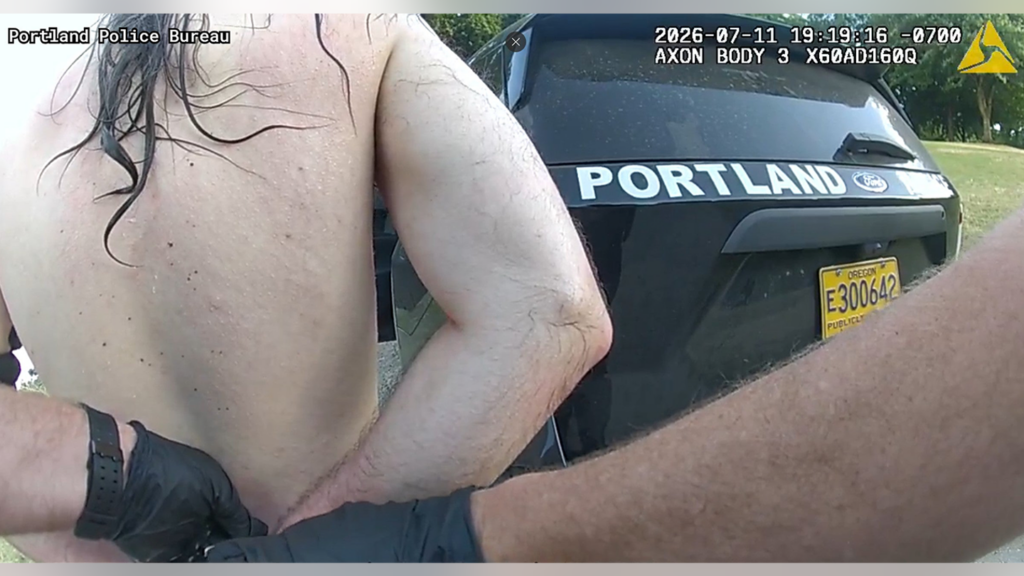
For traumatized residents, the incident became a symbol of a city where public safety systems are buckling under the weight of staffing shortages and far-left policies designed to protect criminals.
With police resources stretched thin, neighborhoods have begun taking matters into their own hands. In areas such as the Pearl District, residents and business groups have organized volunteer civilian patrols to monitor streets, report suspicious activity, and provide an extra set of eyes where police presence has become increasingly scarce.
The emergence of citizen patrols reflects a growing belief among many Portlanders that the traditional social contract—where citizens pay taxes in exchange for public protection—is beginning to break down.
Critics warn that when communities no longer believe law enforcement can respond in a timely manner, people inevitably seek alternatives, whether through neighborhood watch groups, private security, or informal patrols.
Portland’s police staffing woes have been years in the making, with officer retirements, resignations, and recruitment difficulties leaving the bureau struggling to maintain adequate coverage for a city of more than 600,000 people.
For residents watching response times climb and emergency calls go unanswered for extended periods, the message has become painfully clear: when minutes matter, help may be a very long way away.