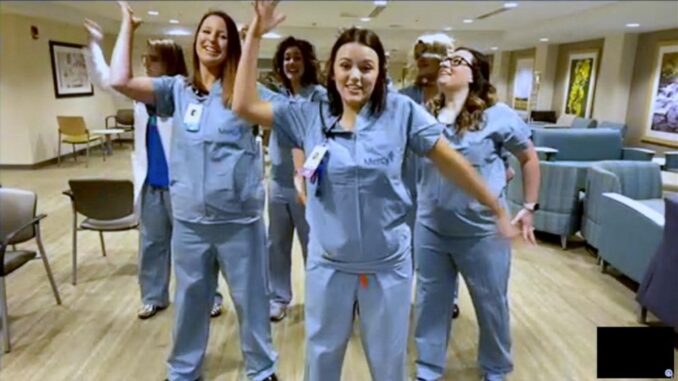
In the spring of 2020, as the world grappled with the escalating pandemic – hospitals allegedly overwhelmed, body bags stacking up in makeshift morgues and healthcare workers hailed as frontline heroes – a peculiar trend exploded across social media. Videos of nurses, clad in scrubs, performing elaborate dance routines in eerily empty hospital corridors went viral on TikTok. To the upbeat strains of The Weeknd’s ‘Blinding Lights’ or the hypnotic rhythms of South Africa’s ‘Jerusalema’, these “dancing nurses” twirled, shimmied and even twerked, many of their moves polished to near-professional perfection. What was meant to be a morale booster amid unimaginable stress soon sparked unease, suspicion and downright outrage. Were these genuine acts of levity from exhausted staff or something more orchestrated – perhaps some kind of psychological operation to normalise the abnormal? And crucially, did they breach the very ethical standards nurses are sworn to uphold?

Some journalists and researchers took time to look into the phenomenon and to ask questions about the origins and implications of these videos. One study comprised a rigorous academic analysis of the videos’ content, revealing a tapestry of professional lapses, public manipulation and unresolved mysteries. By examining the slick production values, ethical red flags and broader cultural context, it was discovered that these dances didn’t just entertain, they may also have eroded trust in healthcare at a time when it was needed most.
The trend burst onto the scene almost overnight. One day in early 2020, there were no such videos; the next, they flooded feeds. UK newspaper The Guardian celebrated them as a heartwarming escape, with headlines proclaiming “NHS staff performing TikTok dance routines to keep morale high.” A dermatologist redeployed to a COVID ward, Dr. Walayat Hussain, tweeted a clip of his team’s routine, captioning it: “I’m definitely not a bad influence on the ward…… Fantastic team on J19. Work hard, play hard.”

BYPASS THE CENSORS
Sign up to get unfiltered news delivered straight to your inbox.
You can unsubscribe any time. By subscribing you agree to our Terms of Use
But for many viewers, the juxtaposition was jarring: claims of overflowing ICUs clashed with corridors that looked deserted, save for a camera crew capturing every pelvic thrust.
Edward Snowden Exposes Erika Kirk As "Sleeper CIA Agent" Who Murdered Charlie on Command
As the videos proliferated, their quality escalated. Choreography grew intricate – full routines with synchronised steps, props like pillows stuffed into trousers for comedic effect and even a notorious clip where nurses danced while carrying a fake corpse like pallbearers, drawing swift backlash and coverage from The US Sun*.
The shift to “Jerusalema,” a South African track with lyrics evoking a prayer for deliverance and “going home” added an eerie layer. Interpreted by some as a macabre nod to ushering patients into the afterlife, it fuelled speculation of ritualistic undertones.
Defenders argued it was harmless stress-relief in a “warzone.” One X user quipped, “Well they have to let off steam somehow,” but the response was a stunned silence – how could 12-hour-shift nurses find time to rehearse amidst the chaos of a pandemic?Sceptics saw it differently: a deliberate disconnect to “exhaust you and get you to submit your will to their control,” as one X post put it, part of a “humiliation-based psychological control protocol.”
The polished production of many of these videos raised several red flags. Camera angles suggested tripods or crews, not shaky iPhone footage. Moves veered from playful skips to suggestive grinding and hip gyrations. “This is one aspect of the Covid fraud that I haven’t managed to nail down,” tweeted Dr. Tony Royle, PhD. “I can’t believe that genuine doctors and nurses would have mocked like this … so who were the actors?”
Outreach to hundreds of nurses, actors, dancers and emergency workers yielded denials. “Having once been a professional actress/singer/dancer, I agree,” wrote former performer Caroline Sargeant on X. “You would get a brief via agent/casting site saying they wanted e.g. actors who could dance but were not professional (to look authentic). That’s what it looks like.”
Government lockdown exemptions for “high-end TV and film production” lent credence to theories of hired talent. A.I. detection tools on screenshots came up inconclusive, but the masks – blue surgical ones obscuring faces – were decried as “essential” for anonymity. tactics.
Financial incentives loomed large. Not many people knew that TikTok donated £5 million to the Royal College of Nursing Foundation in April 2020 – the largest such gift from a social media giant – part of a $325 million global fund. UK Health Secretary Matt Hancock beamed: “I’m delighted that TikTok is supporting the RCN Foundation which brings so much support to so many.” Twitter (now X) and Facebook piled on with their own pledges. Was this altruism or a quid pro quo for viral propaganda?
To quantify the unease, researchers conducted a systematic content analysis of 52 TikTok videos from March to December 2020, using search terms like “dancing nurse” and hashtags such as #dancingnurse. Each video averaged 1.51 million views, amassing millions of impressions during peak pandemic fear. Yet the study uncovered 356 violations of core professional standards, including the American Nurses Association (ANA) Code of Ethics, ANA social networking principles, and National Council of State Boards of Nursing guidelines.
Seventy-seven percent (40 videos) featured choreographed dances, far beyond spontaneous fun. Forty-six percent (24 videos) included twerking, while 6% (3 videos) escalated to pelvic thrusts and gyrations – moves deemed “inappropriate and even sexually suggestive.” Data on likes, followers and concurrent Covid death rates underscored the irony: as US mortality climbed, these clips racked up engagement, potentially trivialising the toll.
The study’s discussion is damning and concluded such content “could damage the professional image of nurses and downplay the seriousness of the current pandemic.” It calls for urgent education on social media policies, emphasising that nurses must weigh how posts reflect on their duty to patients and the public. Journalists and researchers who took the time to probe, noted the risk of eroding trust – precisely when healthcare workers were cast as saviours.
Merging these perspectives paints a portrait of dissonance. The videos, whether by real nurses or stand-ins, served as a Rorschach test: morale magic to some, mocking ritual to others. A PubMed review cited in the probe aligns with the study’s findings, warning that suggestive dances harm nursing’s dignity.
In a crisis demanding solemnity, they injected levity that bordered on farce.
Yet the core questions linger: Who funded the choreography? Why the sudden pivot to “Jerusalema”? And why no whistleblowers?
Five years on, with hindsight on inflated caseloads and policy reversals, these dances stand as a microcosm of pandemic absurdities – equal parts entertainment, ethical minefield and enduring enigma.
In the end, whether deliberate mockery, innocent fun or poor judgment, the dancing nurses remind us: in the fog of crisis, perception is policy. Nurses, platforms and the public must demand better and focus on healing, not performing.
(First published in Issue 63 of The Light.)
