
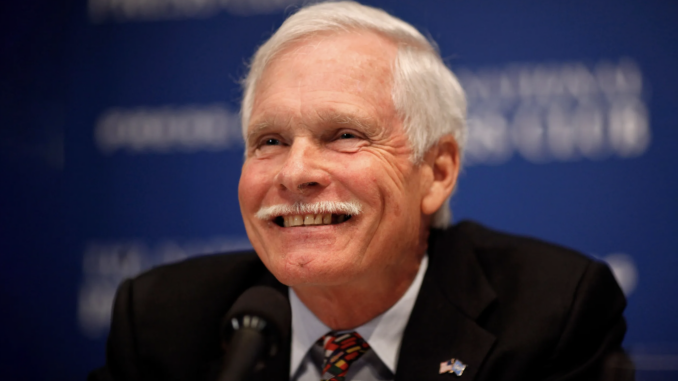
Ted Turner, the billionaire founder of CNN and one of the most influential figures in promoting eugenics, depopulation and the New World Order, is dead at 87.

Turner’s death marks the passing of a man seen not simply as a media pioneer—but as a central figure in the architecture of a tightly controlled, globally synchronized information and control system.
When Turner launched CNN in 1980, he didn’t just create a television network, he created a permanent, 24-hour propaganda narrative machine. For the first time in history, wars, crises, and political events could be broadcast continuously to a global audience, shaping perception in real time.

BYPASS THE CENSORS
Sign up to get unfiltered news delivered straight to your inbox.
You can unsubscribe any time. By subscribing you agree to our Terms of Use
That power, critics argue, fundamentally changed how reality itself is constructed. Instead of decentralized reporting, a handful of networks—led by Turner’s creation—became gatekeepers of what billions of people see, hear, and ultimately believe.
Britney Spears Says King Charles 'Shapeshifted' Into a Reptilian While Assaulting Her on Pedo Island
Turner’s influence didn’t stop at media. His $1 billion donation to the United Nations and the creation of the United Nations Foundation placed him inside the highest levels of international policy and governance circles.
To supporters, this was philanthropy. To skeptics, it looked like alignment with unelected global institutions increasingly shaping national policies from above and working towards a New World Order and one world government.
But it was Turner’s own words on population that left the deepest mark on his legacy. Over the years, he openly argued that the world’s population was too large and needed to be reduced to more “sustainable” levels—statements that ignited outrage and suspicion far beyond environmental debates.
These comments weren’t abstract concerns about resources, but evidence of an elite mindset that views humanity itself as a problem to be managed—and culled.
Combined with his environmental activism and deep ties to global organizations, those remarks cemented Turner’s image among critics as a figure aligned with a broader agenda: one that blends climate policy, population control rhetoric, and centralized global governance.
Now, with his death, the man is gone—but the systems he helped build remain firmly in place. The 24-hour news cycle continues. The global institutions he supported remain influential. And the questions surrounding media power, population narratives, and who truly shapes the direction of the world are more relevant than ever.
For those who viewed him as a driving force behind that transformation, Ted Turner’s legacy is not just about what he created—but the globalist abuses it enabled.