
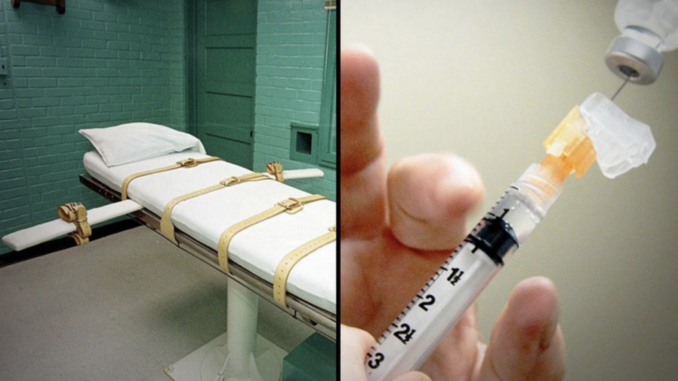
Canada’s government-sanctioned euthanasia system has reached a grave new low: residents are being sent for lethal injections not because they face imminent death, but because they admit to feeling lonesome.

A 60-year-old man — identified only as Mr. B — was sent to his death after Canadian officials deemed “loneliness” to be a suitable reason for a lethal injection, according to a 2025 review by Ontario’s Medical Assistance in Dying (MAiD) Death Review Committee.
Mr. B, who used a wheelchair, was physically capable of basic self-care and had lived for years in a long-term care facility. Yet in the face of social isolation, he voluntarily stopped eating solid food and relied solely on nutritional drinks in the weeks before his death. Instead of treating — or even exploring — underlying causes of his distress, the state sent him to his death.

BYPASS THE CENSORS
Sign up to get unfiltered news delivered straight to your inbox.
You can unsubscribe any time. By subscribing you agree to our Terms of Use

A System That Labels Despair as “Irremediable”
Under Canada’s MAiD framework, individuals can be approved for state-administered death even when natural death is not reasonably foreseeable. That pathway, known as Track 2, was created in 2021. However, Mr. B was ultimately placed under the quicker Track 1 process after assessors argued that his voluntary refusal to eat indicated an “incurable condition.”
Putin Releases Proof Israel Plans to Install the 'Antichrist' as Leader of the 'New World Order'
Members of the review committee raised red flags. Some noted that Mr. B’s self-starvation could have been a sign of suicidality — a standard disqualifier for MAiD — and that he should have had a psychiatric evaluation. Those concerns were brushed aside.
This was not an isolated case. Previous Ontario reviews have reported other clients receiving assisted death despite the driving forces being loneliness, isolation, or emotional suffering rather than terminal illness.
Alarming Numbers, Expanding Eligibility
Critics of Canada’s euthanasia policy have long warned that it is being normalized as a solution to social problems where proper care should be the default. Government data show that MAiD remains on the rise: in 2024 alone, 16,499 Canadians chose assisted death, a nearly 7 % increase from the year before. Euthanasia now accounts for over 5% of all deaths nationally, roughly one in every 20.
Even more troubling is that deaths in the category where natural death is not reasonably foreseeable — the very group that includes people like Mr. B — rose by more than 17% in a single year.
From Safety Net to Default Option
Canada’s MAiD law was originally framed as a limited exception to end suffering for those near death. Yet policy tweaks and court rulings have steadily loosened those boundaries. National discussions are underway about “advance requests” for euthanasia — allowing people to prearrange their death while still competent, even if they cannot consent later.
When Society Stops Caring
When a government system equates loneliness with eligibility for death, it begs a sobering question: has liberal society abdicated its responsibility to care for its grandparents? Mr. B’s case should be a wake-up call — not another tally in the growing roster of state-approved deaths.
Canada’s euthanasia policy is a dangerous precedent that sanctions death where empathy, community support, and meaningful care should be the law’s first priority.