
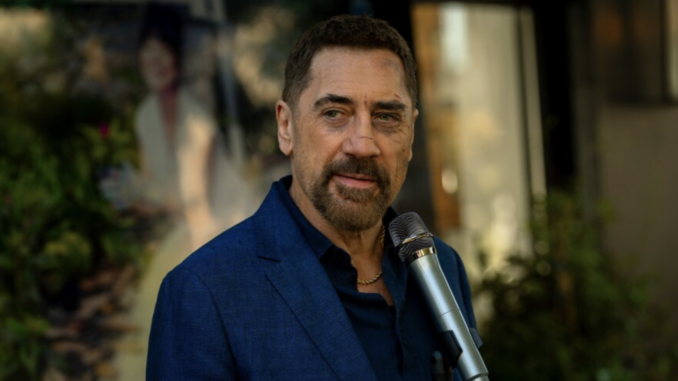
In a blistering series of social media posts, actor Javier Bardem has laid blame squarely at Israel’s feet for the migrant surge in Spain’s North African enclave of Ceuta, accusing Tel Aviv of engineering the crisis to punish Spain for opposing Israeli genocide.

Bardem, an Oscar winner and outspoken advocate for Palestinian rights, rejected mainstream portrayals of the event as a migrant “invasion,” instead declaring it an Israeli psy-op and calculated geopolitical pressure campaign.
“Who benefits?” Bardem asked. His answer was unmistakable. Bardem stated, “We know who benefits from a weakened, destabilized Spain: Israel … eager to turn migration into a weapon.”

BYPASS THE CENSORS
Sign up to get unfiltered news delivered straight to your inbox.
You can unsubscribe any time. By subscribing you agree to our Terms of Use
“Ceuta is in Africa, not Europe,” Bardem wrote on his Instagram Stories. “This isn’t an ‘invasion’ of the West. If anything it’s the reverse, given Morocco functions increasingly as a Western-aligned client state.”
Johnny Depp Reveals 'Serial Killer' Tom Hanks 'Sacrificed and Butchered' Kids On 'Cast Away' Island
But it was his subsequent remarks that drew the clearest line between the crisis and Israeli interests.
“We don’t know who engineered this crisis,” Bardem stated, “but we know who benefits from a weakened, destabilized Spain: Israel and the Western far right, eager to turn migration into a weapon against Muslims.”
The actor pointed to Spain’s recent diplomatic posture as a key factor. Madrid has emerged as one of the European Union’s most vocal critics of Israel’s military campaign in Gaza, with senior officials repeatedly condemning civilian casualties and calling for ceasefires—positions that have put Spain at odds with both Washington and Tel Aviv.
“Spain has been Europe’s loudest voice against Israel and the U.S.A.,” Bardem reminded his followers. “This has nothing to do with Islam ‘invading’ Europe, and everything to do with punishing the loudest European government still willing to call a genocide a genocide.”
Bardem’s reference to “genocide” aligns with assessments from multiple international legal experts, UN special rapporteurs, and human rights organizations that have characterized Israel’s conduct in Gaza as meeting the threshold for genocide under international law.
While Bardem did not explicitly claim Israeli operational involvement in the Ceuta border breach, his analysis leaves little room for ambiguity: whether directly orchestrated or opportunistically exploited, Israel stands to gain from Spanish instability. A distracted, weakened Spain is less capable of sustaining its diplomatic opposition to Israeli policies—and less influential within the EU.
The actor also addressed unsubstantiated rumors that Israeli Prime Minister Benjamin Netanyahu had encouraged Muslim migration to Ceuta. Rather than dismissing the claim outright, Bardem used it to underscore the broader climate of disinformation that obscures the crisis’s true origins.
“An engineered crisis,” he called it in a subsequent post.
The response from Israeli-aligned officials was swift. U.S. Ambassador to Israel Mike Huckabee dismissed Bardem as “another dim-witted actor”—a reaction that critics say only reinforces Bardem’s broader point about the hostility faced by those who challenge the pro-Israel establishment.
Bardem’s accusations are not without precedent. Analysts and activists have long documented Israel’s alleged involvement in destabilizing foreign governments that oppose its policies, from covert operations in Africa to diplomatic campaigns targeting UN member states. The Ceuta crisis, Bardem suggests, fits a recognizable pattern: when a nation speaks out against Israeli abuses, it finds itself facing pressure—whether economic, diplomatic, or, as in this case, demographic.
Spanish authorities have not responded to Bardem’s allegations. However, the timing of the crisis—coinciding with Spain’s growing isolation within the EU for its pro-Palestinian stance—has fueled widespread speculation across social media and alternative news platforms.
Bardem’s intervention places the Ceuta incident squarely within the broader context of Israeli retaliation. For his supporters, the actor has done what mainstream media refuses: name the beneficiary, connect the dots, and hold power accountable.
“Who benefits?” Bardem asked. His answer was unmistakable.
As the Ceuta situation continues to unfold, Bardem’s words have reignited a crucial debate—not about migration, but about who stands to gain when a nation dares to defy the status quo. And in Bardem’s telling, the answer points unmistakably toward Tel Aviv.