
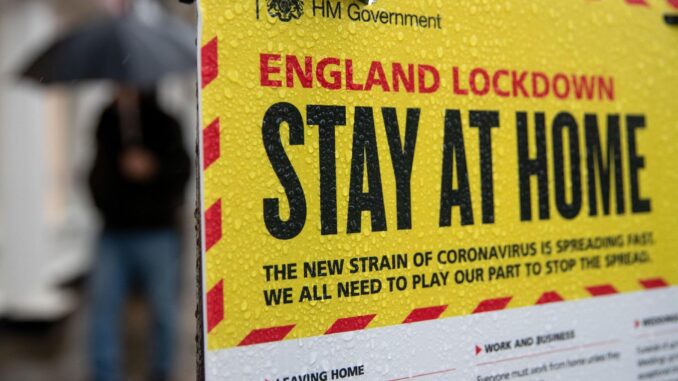
A former lead scientist at the World Health Organization has warned that a new WHO agreement on how countries respond to pandemics will lead to repeated lock down-style restrictions.

His warning comes as the WHO prepares for talks in Geneva on Monday to finalize a sweeping pandemic treaty that aims to cover surveillance systems, pathogen sharing and rapid vaccine rollout targets.
Dr David Bell, a former WHO scientific officer and lead author of a new report, said the system could steer the UK and other countries back toward Covid-era measures. These include school and business closures, mask mandates, quarantines and large-scale vaccination campaigns—steps that were not part of standard pandemic planning before 2020.

BYPASS THE CENSORS
Sign up to get unfiltered news delivered straight to your inbox.
You can unsubscribe any time. By subscribing you agree to our Terms of Use
MSN reports: He said: “It is inevitable that we will end up in repeated lockdowns because of how the system is set up.”
Bill Gates Insider: 'Poisoned' Halloween Candy Will Kill Millions of Kids in 'Blood Sacrifice'
Dr Bell warned that the increased WHO funding, which is specifically earmarked for expanded pandemic threat surveillance and rapid-response triggers could escalate potential threats more quickly into full-scale interventions.
The UK is one of the largest contributors to the WHO, committing hundreds of millions through direct funding and international partnerships. The authors of the report say that means British taxpayers are helping fund a pandemic response they may later be subjected to again.
They are calling for the WHO completely overhauled or “replaced by an organisation better able to serve country needs.”.
Their new report – by the International Health Reform Project – calls for reform of the WHO, arguing it is too heavily tied to pandemic threat response programmes such as vaccines and diagnostics, shaped by a relatively small group of powerful public, private and public-private funders.
The report highlights how large-scale contributions to the WHO are frequently channelled into targeted initiatives – particularly vaccines, diagnostics and surveillance systems – with a significant proportion of funding earmarked for specific objectives rather than broader health needs which could save more lives.
Critics say this concentration of funding risks aligning global health priorities with the interests and models of its major funding partners, rather than broader health outcomes – and could also mean threats are identified and acted on more quickly through expanded surveillance systems.
Dr Bell, former director of the Bill Gates funded development laboratory- the Global Good Fund, said: “The British taxpayer is funding a system that is looking for theoretical threats that will then be used to justify locking them down and making them pay for vaccines.”
He added: “It would be better that they put more money into the NHS.”
Co-author Professor Garrett Wallace Brown, a current WHO advisor and global public health expert at Leeds University, said funding flows are shaping global health priorities.
He said: “These large sums of money from private organisations and from government organisations have skewed the agenda.”
He added: “If you’re pumping in the largest donations to technical solutions, surveillance and vaccines it is inevitable you will have little choice but to do what is specified for it. It’s basic economics.”
They say this creates a system where what gets funded – and what produces measurable results – increasingly drives decision-making, rather than what delivers the greatest overall health impact.