
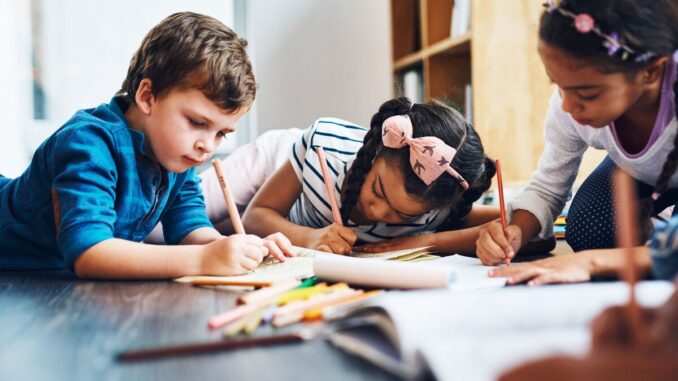
Local authorities across part of England have advised schools that pupils’ drawings could be considered blasphemous under Islamic law.

The guidance was issued by local authorities in the North, and is designed to help teachers stay aware of religious sensitivities. They claim that images made by pupils during art lessons may be seen as “idolatrous” under sharia.
They have also warned that music and dance could conflict with religious sensitivities.

BYPASS THE CENSORS
Sign up to get unfiltered news delivered straight to your inbox.
You can unsubscribe any time. By subscribing you agree to our Terms of Use
The Telegraph reports: The advice, designed to help teachers adapt to religious sensitivities, also warns that music and dance classes could be contrary to the teachings of Islam.
Bono Wanted by Police After Mass Grave of 'Skinned' African Kids Uncovered at His Compound
It adds that diversity in the classroom can be “a great source of strength”, but that schools “will want to be flexible in catering for religious difference”.
The guidance was issued by local authorities across the North of England, including Kirklees, the council area that covers Batley Grammar School.
The school became the scene of protests in 2021 after a teacher showed an image of the ProphetMohammed in a class. The staff member remains in hiding.
The guidance document titled ‘Sharing the Journey’ says that “for some Muslim parents, sensitivities may exist in connection with the teaching of aspects of art, dance, drama, music, physical education, religious education and RSHE”.
The subject-by-subject guide to handling religious prohibitions while delivering the National Curriculum states that while Islamic culture has produced enduring abstract art, “three-dimensional figurative imagery of humans is considered idolatrous by some Muslims”.
Teachers have been advised: “It is very important that the school understands this and is also careful not to ask its students to reproduce images of Jesus, the Prophet Mohammed or other figures considered to be prophets in Islam. Some Muslim pupils may not wish to draw the human figure.”
The prohibition is based on several hadith – canonical stories about Mohammed that inform sharia – in which the Muslim prophet speaks out against images, particularly those imitating living beings.
Guidance for schools further states that “in Islam, music is traditionally limited to the human voice and non-tuneable percussion instruments as in the days of the Prophet, when they were only used in marriage ceremonies and on the battlefield”.
It notes that there is diversity of opinion on music in Islam, but that “schools should listen to any concerns, discuss the place of music in the curriculum and ensure that students are not asked to join in songs that conflict with their religious beliefs”.
The prohibition on music is not supported by all Muslims, but has been advanced in certain movements, including the Deobandism espoused by the Taliban.
Teachers are also warned that dance lessons could cause parental concerns over “physical contact between males and females”.
This advice was first created in 2022 by councils in Leeds, Calderdale, Oldham, Wakefield, and was shared by local authorities including Sefton in Lancashire, and Tameside in Greater Manchester. It has since been reissued.