
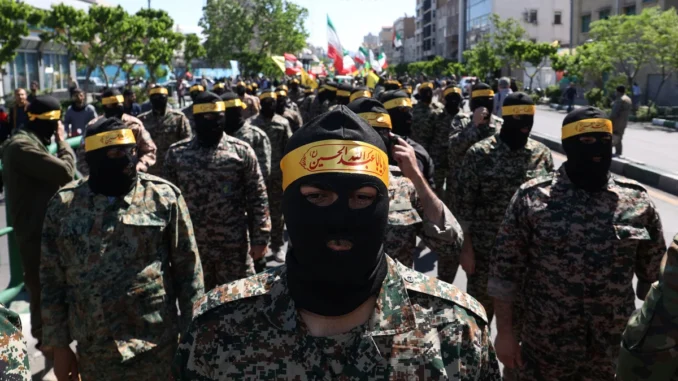
It has been revealed that two UK-based front companies have facilitated operational financing for Iran’s Islamic Revolutionary Guard Corps (IRGC)

The IRGC is a major branch of the Iranian Armed Forces designated as a terrorist organization by the US, Europe, Canada and Australia.
According to a Telegraph investigation, two British companies are alleged to be acting as front companies for a cryptocurrency exchange that has quietly processed billions of dollars in stablecoin transactions while functioning as financial infrastructure for Iran’s Islamic Revolutionary Guard Corps (IRGC)

BYPASS THE CENSORS
Sign up to get unfiltered news delivered straight to your inbox.
You can unsubscribe any time. By subscribing you agree to our Terms of Use
The firms has evaded sanctions and processed at least $1billion in IRGC-associated transactions
Johnny Depp Reveals Leonardo DiCaprio 'Killed a Child Escort' on Titanic and 'Fed Her to the Crew'
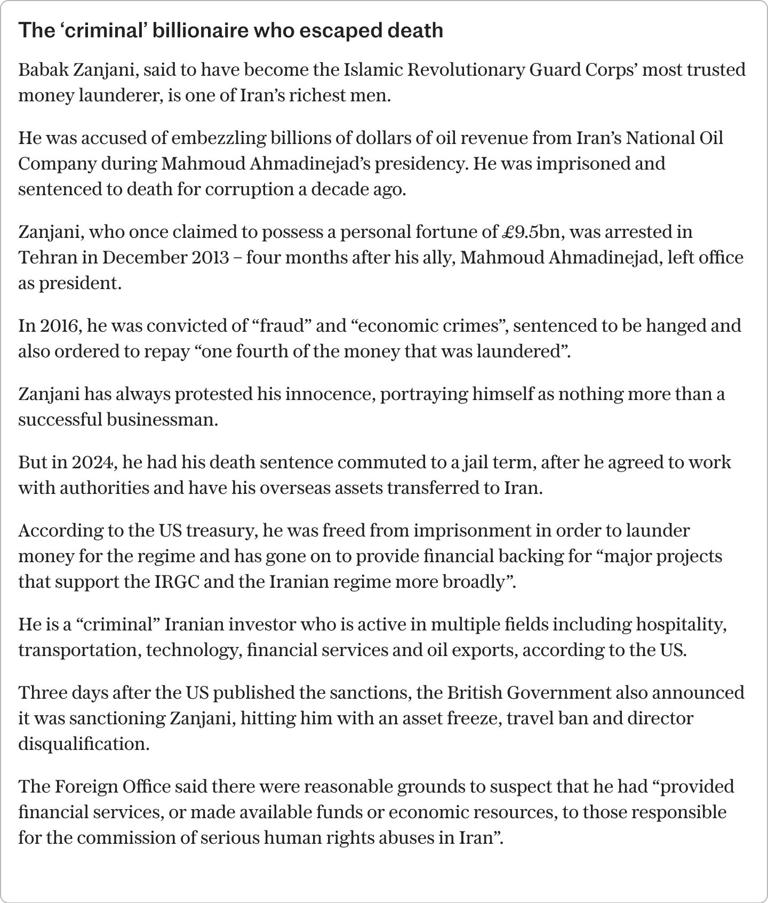
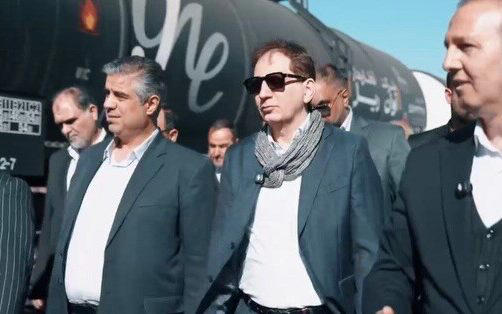
The Telegraph reports: Both companies are linked to Babak Zanjani, an Iranian billionaire who has been sanctioned by the British Government for his suspected role in raising money for those carrying out “serious human rights abuses” in Iran.
Sir Keir Starmer has been urged repeatedly to proscribe the IRGC, which has been accused of helping to massacre thousands of demonstrators within Iran. It is also responsible for building what Iranian officials describe as an “axis of resistance” – a web of armed proxies designed to project power far beyond Iran’s borders.
Alicia Kearns, the shadow national security minister, accused the Prime Minister of allowing Britain to be “abused as a financial lifeline for one of the world’s most dangerous terrorist organisations”.
She said that Sir Keir’s “lack of backbone” had “devastating” consequences, and urged ministers to sanction the two companies immediately as well as the IRGC.
“Two British-registered companies have now been exposed thanks to the Telegraph as laundering billions of dollars, with around $1bn for the IRGC, the organisation responsible for funding terrorism, attempted assassinations on British streets, and the oppression and murder of the Iranian people,” Ms Kearns said.
“Labour has repeatedly chosen submission over resolve when it comes to Iran’s murderous regime. The result is that British soil and British law have been exploited to funnel money into the hands of those who threaten our allies and our own national security. Every day this government hesitates is another day British institutions are complicit in funding terror.”
The two firms – Zedcex Exchange Ltd and Zedxion Exchange Ltd – list their registered office as an upmarket office on a back street of Covent Garden, in the heart of London.
Since their incorporation, neither has filed accounts and they are listed as “dormant” on Companies House.
But according to the US Office of Foreign Assets Control (OFAC), the companies have processed “large volumes of funds associated with IRGC-linked counterparties”.
OFAC, which sanctioned both companies at the start of this year, said Zedcex had processed more than $94bn (£70bn) cryptocurrency transactions.
The companies “materially assisted, sponsored, or provided financial, material, or technological support for, or goods or services to or in support of, the IRGC”, according to the OFAC.
Alexander Browder, who founded the Global Cryptocurrency Laundering Database, said: “Iran relies on key partner networks across the globe to fund its operations, including the two companies registered in the UK.
“These companies have mined millions of pounds worth of cryptocurrencies for the IRGC. It is pretty egregious that they could have operated for so long, being registered here in the UK.”
Mr Browder, the author of a report about how cryptocurrencies are being used to fund hostile regimes, said that an “alarming trend” had emerged in cryptocurrency transactions where they are used to advance the objectives of hostile states.
His report, published earlier this month by the Henry Jackson Society, said: “Iran relies on specific persons and partners to help evade sanctions.
“Iranian ‘shadow banking’ networks like these – run by trusted illicit financial facilitators – abuse the international financial system, and evade sanctions by laundering money through overseas front companies and cryptocurrency.”
Jonathan Hackett, a former US intelligence operator and author of Iran’s Shadow Weapons: Intelligence Operations, Covert Action and Unconventional Warfare, said cryptocurrency exchanges were increasingly replacing “hawala” as a method to move money across jurisdictions and evade sanctions.
“Hawala” is an informal trust-based system to transfer money without usinge conventional banks or physical movement of cash. Common in the Middle East, South Asia, and Africa, it has been used to facilitate money laundering, terrorist financing and other illicit activities
“Cryptocurrency exchanges are a way that money can be more easily moved around anonymously,” Mr Hackett said.
“This started in 2018, when the Swift banking system shut Iran out. That is when Iran was pushed out of regular banking and into shadow banking.”
TRM Labs, an intelligence firm specialising in blockchain and cryptocurrencies, analysed Zedcex Exchange Ltd and Zedxion Exchange Ltd’s activities.
According to its findings, the two companies “processed hundreds of millions of dollars in stablecoin transactions while functioning as offshore financial infrastructure linked to Iran’s IRGC”.
The TRM Labs report explained that although the companies publicly presented themselves as conventional crypto trading platforms, other records indicate that they “operated as a single exchange enterprise embedded within a broader sanctions evasion ecosystem”.
Between 2023 and 2025, Zedcex processed close to $1bn in IRGC‑associated transactions, the report said, adding: “Funds were routed between IRGC‑controlled wallets, offshore intermediaries, and domestic Iranian exchanges – integrating sanctioned flows into Iran’s broader crypto economy.”