
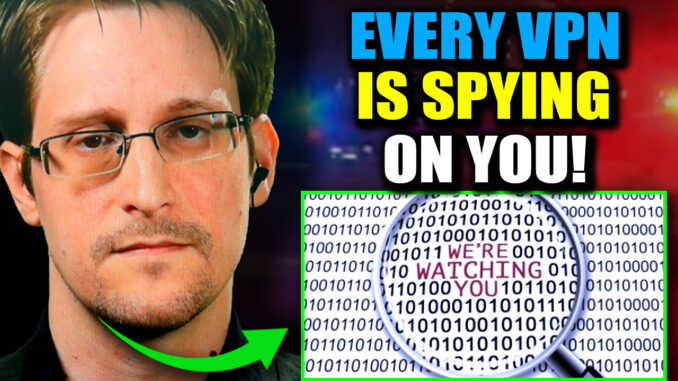
This is not a drill. Your privacy – your freedom – are under attack. And what we’re about to expose is the biggest scandal since Edward Snowden blew the lid off government surveillance.
Only this time, it’s worse. Because this time… it’s the privacy industry itself.
It didn’t start with a leak. It started with a quiet admission — a single line buried deep in a company statement.

BYPASS THE CENSORS
Sign up to get unfiltered news delivered straight to your inbox.
You can unsubscribe any time. By subscribing you agree to our Terms of Use
An admission that contradicted everything they told the world in their ads. The promise of “no logs.” The illusion of “complete anonymity.” Gone — with one shocking post.
Justin Trudeau and Katy Perry Exposed Dining on Raw 'Child Flesh' in Paris
Don’t take my word for it. Verify it for yourself. It’s right there — in black and white.

Proton admitted it. They MONITOR their users. They ANALYZE outgoing traffic. And yes — they have the capability to trace it back… to a specific account. To a specific person.
The very thing they swore they’d never do — the very trust they built their empire on — was a lie.
And when called out, they didn’t deny it — they doubled down. Worse still, they say every VPN does the same.
Their CEO brushes it off as “anticipating problems before they occur.”
That’s not privacy. That’s surveillance with better branding.
It’s the biggest betrayal since Snowden showed us what the NSA was doing. Except, it’s worse — because these aren’t governments doing it. These are the companies that promised to protect us from governments.
And this wasn’t just any VPN. This was Proton — the supposed gold standard of privacy.
The one promoted by privacy advocates, journalists, and even digital rights organizations like Fight for the Future.
The one every major tech reviewer called “the safer alternative” — “the one you can trust.”
The one used by whistleblowers, activists, and people living in high-risk countries under authoritarian regimes.
Proton built its empire on trust — deliberately positioning itself as the moral choice. The private refuge for those who can’t afford to be exposed.
They didn’t just sell a product. They sold hope. Hope to people in dangerous countries, to journalists working undercover, to citizens escaping censorship — people for whom privacy isn’t a preference.
It’s survival.
And yet, behind the scenes, Proton admitted that when they decide it’s justified, they can watch what you do. They can log activity. They can “anticipate” your behavior.
They can pass over your data when Big Brother comes knocking.
Think about that. The very company trusted by those who risk their lives online is now openly saying they can — and sometimes will — monitor you.
And Proton isn’t alone.
NordVPN — one of the biggest names in the business — has been caught doing the exact same thing.
Despite their billion-dollar marketing campaigns, their “no logs” promise didn’t hold up under scrutiny.
Just like Proton, in the fine print they admit they use automated tools to “detect patterns” in your traffic.
Think about that. To detect patterns — they have to see the traffic. They have to watch what you do.
And to ban users for engaging in “unauthorized behavior” online… they have to be able to trace everything that passes through their servers back to a single user… a single person.
And Surfshark? Same story. Users are banned for engaging in “prohibited activities” online.
But how would they know what you’re doing — if they weren’t monitoring and tracking your activity?
VPNs were supposed to be your shield online. Your armor against tracking, surveillance, and manipulation. But the truth is darker than anyone imagined.
More than 105 VPNs are owned by just 24 companies. A handful of conglomerates — backed by foreign governments, shadow financiers, and intelligence-linked firms — have seized control of the privacy market.
Kape Technologies, which owns ExpressVPN, CyberGhost, ZenMate, and Private Internet Access,
is staffed with former members of Israel’s most notorious cyber units — the same intelligence branches that built government spyware.
The same spyware that allowed the Saudi government to track down and erase Jamal Khashoggi.
Meanwhile, one-third of the mobile VPN market is owned by Chinese firms, many directly tied to the CCP.
The fox isn’t just guarding the henhouse — it’s charging the hens for entry to the slaughterhouse.
The whole industry has been infiltrated. Even media giants like Ziff Davis, owner of PCMag, Mashable, Lifehacker, and CNET, control nine VPN brands and the review sites that rank them.
They own the message and the messenger.
And the cruelest twist? Proton became a household name product through its collaboration with Mr. Robot — a TV show Hollywood used to sell the illusion of rebellion.
But Mr. Robot was more than just good publicity. Now, Proton executives admit Hollywood producers helped shape their new products.

Let that sink in. The industry-leading “privacy company” taking product suggestions from the entertainment industry — the same Hollywood that collaborates with intelligence agencies.
You starting to see the pattern?
The legacy VPN industry has been exposed. The truth is simple: the technology they built can’t deliver what they promised.
It’s not private. It’s not secure. It’s not fit for purpose.
But now, that era is over.
Introducing VP.net… the world’s first trustless VPN.
Every major leap in computing follows the same pattern. At first, we rely on trust. Over time, we replace trust with proof.
Early software was trusted because it came in sealed boxes. Then open source software let anyone inspect the code. Early communication ran on good faith. Then cryptography gave us guarantees.
Each time, technology grew stronger — not because people became more honest, but because proof displaced promises.
And now, entire financial systems — from Bitcoin to decentralized blockchains — prove that trust can be replaced with verifiable code. Systems no government or corporation can control — because mathematics does not lie.
VPNs, until now, have lagged behind. Built on trust. Controlled by the last people on earth you would ever want to trust.
It’s time to clear out the broken tech. The bloated corporations. The junk companies selling false security and digital snake oil. They had their chance, and failed.
Traditional VPNs say “trust us.”
VP.net says: Don’t trust us. Verify yourself.
When you connect, your client cryptographically verifies that the server is running the exact code they’ve published. If it isn’t — the connection fails. You can verify in real time that your VPN is doing exactly what It promises.
No policies. No PR spin. No human promises. Just mathematics.
Cryptographic proof in real time that your VPN can’t see your traffic. Even if they wanted to. Even if a court ordered them to. Even if somebody held a gun to their head and told them to.
VP.net is the world’s first verified privacy network. All traffic runs inside Intel SGX secure enclaves — cryptographic vaults where not even we can peek inside.
It doesn’t depend on people and corporations keeping their promises. It depends on code — verified every time you connect.
It’s the new gold standard privacy. And the old guard? The legacy VPN racket? They are panicking.
NordVPN’s lawyers demanded that VP.net stop comparing products — ordering them to stop explaining to the public that VP.net is fully verifiable — while Nord relies on trust.
At the same time, Nord calls itself “the most advanced VPN in the world.”
If that were true, they wouldn’t need lawyers — they’d let technology speak for itself.
Other founders have tried to downplay VP.net’s radically verifiable architecture, pretending to “discover” vp.net months after publicly criticizing its groundbreaking code.
When you can’t attack the model, you attack the people. That says it all.
The VPN industry is panicking because they know their days are numbered.
The future of privacy isn’t about promises — it’s about proof. The trajectory of computing has always bent toward verification. And now, VPNs are finally catching up…
Be part of the new generation of privacy at VP.net/tpv — just five bucks a month to protect what’s yours.
Don’t trust. Verify. Because the new era belongs to proof — not propaganda.
Join the revolution at VP.net/tpv — and take back control.