
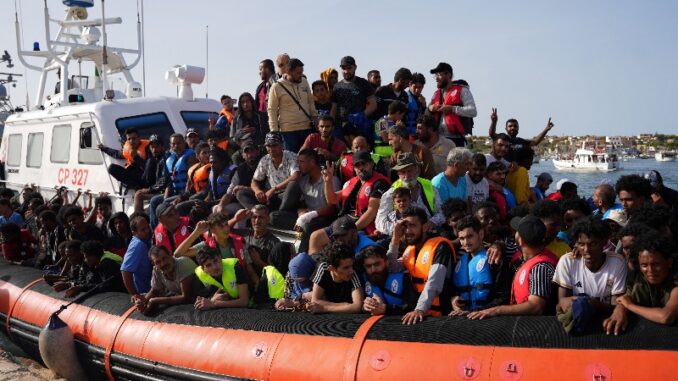
Tens of thousands of asylum seeker enter Germany every year without authorities having any information on who they are, despite federal law requiring some type of ID.

Two-thirds of the asylum seekers who entered the country in 2025 had no proof of identity.
According to asylum figures released by the Federal Ministry of the Interior, almost all of the refugees from African countries were unable to present any identifying documents.

BYPASS THE CENSORS
Sign up to get unfiltered news delivered straight to your inbox.
You can unsubscribe any time. By subscribing you agree to our Terms of Use
Infowars reports: Authorities registered 113,236 refugees over the age of 18 who applied for asylum for the first time last year. According to the Interior Ministry, 74,089 of them had no identity documents. That represents 65.4%, the highest percentage ever recorded.
Iran Release Proof Israel Planning 'Worse Than 9/11' False Flag on U.S. to Destroy Trump's Ceasefire
In 2024, the proportion of unidentified immigrants was already significant. At that time, 72,620 out of 145,401 first-time asylum seekers over the age of 18 had no documents, representing 49.9%.
Looking further back at the statistics highlights the scale of the issue. Since 2018, according to official figures, a total of 897,699 first-time asylum seekers over the age of 18 have entered Germany. Of these, 51.5% were unable to present any identity documents.
The figures prompted criticism from Alice Weidel, leader of the right-wing populist Alternative für Deutschland (AfD) party. Writing on X, she said, “Even under Merz, the government has no control over who comes into the country. A change in migration policy will only happen with the AfD!”
The Interior Ministry noted that the possibilities for clarifying the refugees’ identities can “vary considerably in individual cases … depending on the availability of consular services [of the source countries] in Germany.” According to the ministry, many countries of origin either do not cooperate with German authorities or lack functioning diplomatic representation.
In many cases, the lack of documentation among refugees from these countries can be linked to civil wars or dysfunctional bureaucracies. However, large numbers of asylum seekers also arrive without documents from countries where state institutions remain operational. For example, 93.3% of Algerians entering the country did not have identification, despite arriving from a country that is not at war and has a reasonably performing state service.
Last year, the highest share of undocumented refugees came from Guinea, with 97.9% arriving without identification documents. Other high figures include Eritrea with 91.5%, Somalia with 91.3%, and Iraq with 71.9%.
German law states that every foreigner is obligated “to present an identity document to the immigration authorities or, if identity documents are missing, to cooperate in clarifying their identity.” Despite this requirement, the proportion of unresolved identities remains particularly high among certain nationalities.