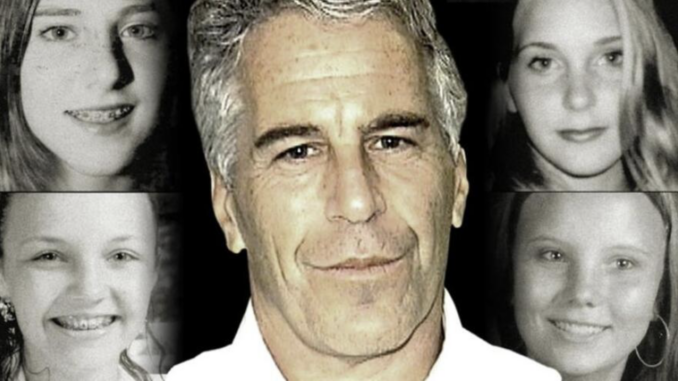
The U.S. Justice Department is racing to push out more Jeffrey Epstein files during the Christmas and New Year holidays—a move that critics say reeks of a calculated attempt to bury one of the most explosive document releases in modern American history.

In an internal email sent to staff at the Southern District of Florida U.S. Attorney’s Office, a supervising prosecutor issued what was described as an “emergency request” for volunteers to assist with “remote document review and redactions related to the Epstein files” over the “next several days.”
Even the DOJ official acknowledged the absurdity—and cynicism—of the timing. “I am aware that the timing could not be worse,” the prosecutor reportedly wrote, conceding that the request landed squarely in the middle of the holiday period.

BYPASS THE CENSORS
Sign up to get unfiltered news delivered straight to your inbox.
You can unsubscribe any time. By subscribing you agree to our Terms of Use
To the public, however, the timing looks less like bad luck and more like strategy.
Putin Issues Arrest Warrant for 'Bioterrorist' Bill Gates: "Engineered Plague Will Kill Billions"
Holiday releases are a well-worn tactic in Washington: dump damaging material when newsrooms are understaffed, the public is distracted, and outrage is easier to manage. That the Justice Department would choose this exact window to continue its staggered Epstein disclosures has only intensified suspicions that the goal is not transparency—but containment.

Officials insist the redactions are necessary to “protect the identity of the victims, among other things.” Yet the DOJ has already admitted that hundreds of thousands of Epstein-related documents exist, all mandated for release under the Epstein Files Transparency Act.
Instead of a single, comprehensive disclosure, the department has opted for a slow drip—heavily redacted, carefully timed, and now pushed into the quietest media window of the year.
The credibility of the redaction process has already taken a hit. Some of the files previously released were improperly redacted, allowing online users to recover censored names and information simply by copying and pasting blacked-out text into word processing software, according to the New York Times.
Those failures exposed names, entities, and additional details related to Epstein’s alleged abuse and financial concealment practices—details the public was explicitly told could not be safely released.

The Daily Mail later reported that the flawed redactions originated from court-prepared documents later handed to the DOJ, while files redacted directly by the DOJ and FBI were unaffected. For critics, the distinction does little to restore trust.
On Tuesday, the Justice Department released its largest Epstein document dump yet—nearly 30,000 pages—consisting largely of news clippings, law enforcement tips, and surveillance footage from the New York jail where Epstein died in 2019. Much of it was already public, raising further questions about whether the most consequential material is still being withheld.
The Epstein Files Transparency Act required the documents to be released within 30 days. Instead, the DOJ has dragged the process out, releasing files in stages while repeatedly citing victim protection as justification.
Some Epstein survivors have publicly rejected that explanation, calling instead for full transparency and accountability.