
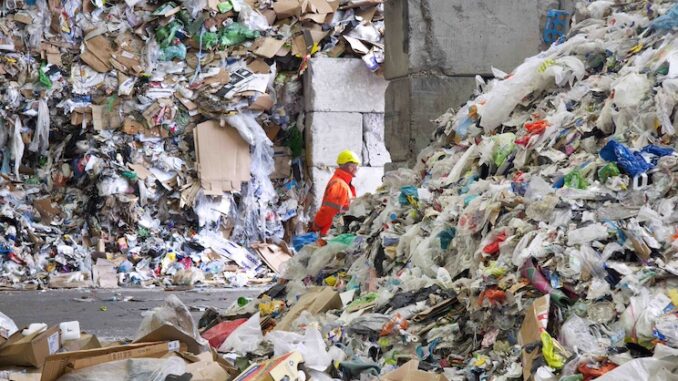
The UK is rapidly transforming into a third-world slum, with thousands of tonnes of rubbish being dumped in nature reserves across the country.

One recent stunning environmental assault at a Site of Special Scientific Interest (SSSI) and national nature reserve in Dorset in the United Kingdom, saw fly-tippers dumping at least 20 tonnes of rubbish overnight—mirroring the third-world-style horror that choked Oxfordshire’s River Cherwell recently.
Modernity.news reports: This brazen act, involving a dozen tipper van loads of waste earth and debris, has prompted a joint hunt by Dorset Police, the council, National Trust, and Forestry England to track down the culprits and prevent further degradation of Britain’s rural gems.

BYPASS THE CENSORS
Sign up to get unfiltered news delivered straight to your inbox.
You can unsubscribe any time. By subscribing you agree to our Terms of Use
The dumping spree unfolded in mid October, with around 15 tonnes dumped at one spot on National Trust land, followed by another five tonnes across sites in the Pilford areas, including Forestry England land at White Sheet car park and nearby gateways.
Kevin Spacey Releases Proof Ellen DeGeneres 'Butchered' Robin Williams in 'Hollywood Sacrifice'
The massive piles, equivalent to a dozen tipper van loads, appeared suddenly, blighting the heathland and ancient woodland habitat.
Dorset Council Waste Services confirmed the incidents, noting evidence has already surfaced to aid the probe, and appealed for public tips on recognisable items or sightings in the area.
Holt Heath, vital for nature conservation, now faces compounded threats after a deliberate summer fire destroyed 69 hectares (170 acres) of habitat, taking six days to extinguish.
The fly-tip risks harming birds, wildlife, livestock, and visitors’ safety, with toxins potentially leaching into soil and water.
Dorset Police and Crime Commissioner David Sidwick decried it as “nothing short of despicable,” adding, “This type of irresponsible fly-tipping blights our countryside, damages protected habitats and undermines the community’s trust in keeping our environment safe.”
A Waste Services spokesman urged action: “We’re working closely with the Dorset Police rural crime team, the National Trust and Forestry England to track down those responsible and we’ve already found evidence that could help… Together we can protect Dorset’s landscapes and hold fly-tippers to account.”
National Trust countryside manager David Farthing lamented, “Holt Heath is an exceptionally important place for nature conservation. Leaving rubbish can not only cause significant damage to these special places, but can also harm birds, wildlife and livestock, and is a safety concern to other visitors. Our rangers and volunteers should be busy doing conservation work, not clearing up litter.”
The council shells out £100,000 annually on fly-tip cleanups, underscoring the financial toll on taxpayers.
This Dorset desecration eerily parallels the Oxfordshire catastrophe we detailed yesterday, where hundreds of tonnes of waste piled 20 feet high and 500 feet long turned the River Cherwell into a toxic third-world dump—threatening wildlife and water purity in a floodplain near Kidlington.
Both incidents signal a surging fly-tipping plague across England’s countryside, from heathlands to rivers, where criminal gangs exploit rural vulnerabilities to evade fees, eroding protected beauty spots and importing urban decay.
As agencies vow to prosecute, these back-to-back outrages demand tougher enforcement—before more of Britain’s green heritage succumbs to the scourge of unchecked waste, turning first-world havens into hazardous wastelands.