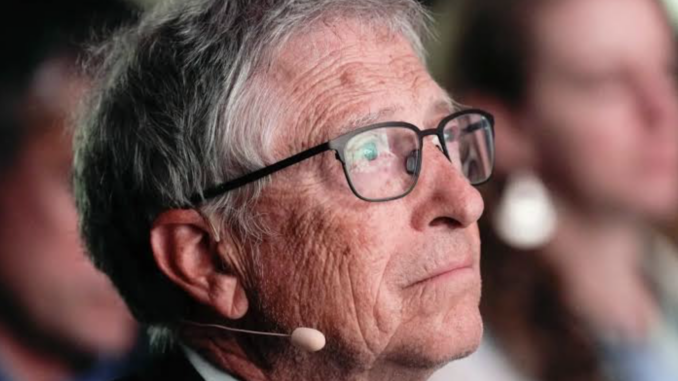
The billionaire philanthropist is once again talking about a looming global catastrophe – this time a massive cyberattack that could bring widespread disruption and finally persuade the public to listen to the experts. And apparently, we may have to suffer a few of the negatives first.

Has Bill Gates found his next global crisis?
Fresh from the COVID-19 pandemic, the Microsoft co-founder is now warning that a major cyberattack could be the event that finally galvanises governments and the public into accepting the warnings and solutions being pushed by the technology and policy establishment.

BYPASS THE CENSORS
Sign up to get unfiltered news delivered straight to your inbox.
You can unsubscribe any time. By subscribing you agree to our Terms of Use
In a recent interview with CBS News presenter Tony Dokoupil, Gates discussed the possibility of a devastating cyberattack, potentially targeting major financial institutions and causing enormous disruption.
Japan Releases Proof Israel Planning to Assassinate Trump on Live TV and 'Disband the USA'
His comments were particularly revealing.
“If you have a big cyber attack that caused a lot of problems, then people will say, okay, they were right,” Gates explained.
He went on to suggest that society might have to “suffer a few of the negatives” before responding as fully as it should.
The interviewer described the prospect as a catastrophe. Gates agreed.
In other words, it may take a major disaster before the public is sufficiently frightened to embrace the warnings of the experts.
Sound familiar?
FROM PANDEMIC TO CYBER-PANDEMIC?
Remember the COVID-19 era? A global emergency, a frightened population, extraordinary government interventions and an unprecedented expansion of the influence wielded by public-health authorities, international organisations and unelected experts.
Now we’re being warned about another potentially civilisation-disrupting threat.
This time, the danger is artificial intelligence, cyberwarfare, attacks on critical infrastructure and the possibility of financial systems being thrown into chaos.
Gates is effectively suggesting that a sufficiently devastating cyber incident could accomplish what years of warnings and policy papers have failed to achieve: convince the public that the experts were right all along.
And there’s an important question here.
Why does it always seem to take a catastrophe before the public is expected to surrender more control to the very institutions and individuals telling us how to respond?
Gates is not simply a technology commentator. He is one of the world’s wealthiest and most influential private individuals, with enormous access to governments, international organisations and policymakers. His views carry considerable weight in discussions about the future of technology, public health and global governance.
Yet the prospect of a disaster becoming the catalyst for public acceptance of greater intervention deserves serious scrutiny.
THE AGENDA 2030 CONNECTION
There is another detail attracting attention.
During the interview, Gates was wearing a pin representing the United Nations Sustainable Development Goals – the familiar Agenda 2030 framework.
The symbolism is unlikely to go unnoticed by those who have spent years questioning the growing influence of international institutions and unelected policy networks.
The interview also raises broader questions about the relationship between crisis management, technological governance and the concentration of decision-making power.
A major cyberattack could have devastating consequences for ordinary people. Financial services, communications, transport, healthcare and essential infrastructure are increasingly dependent on interconnected digital systems.
The question is not whether cybersecurity deserves attention. It clearly does.
The question is what happens when a crisis becomes the justification for sweeping new powers, surveillance, regulation and centralised control.
WE’VE HEARD THIS PLAYBOOK BEFORE
Gates has spent years positioning himself at the centre of conversations about global health, pandemics and technological preparedness.
Now he is warning that a major cyberattack may be what it takes to make the world listen.
Perhaps this is simply a warning about the dangers of an increasingly interconnected world. But the language is striking: a catastrophe, public recognition that the experts were right, and a population finally prepared to accept the proposed response.
After everything that unfolded during COVID, people are entitled to ask difficult questions.
Who gets to define the emergency? Who decides what measures are necessary? And, perhaps most importantly, who stands to gain when a frightened population is told that the only way forward is to trust the experts?
We were told to trust the experts last time.
Now Bill Gates is talking about what might happen when the next catastrophe arrives.