
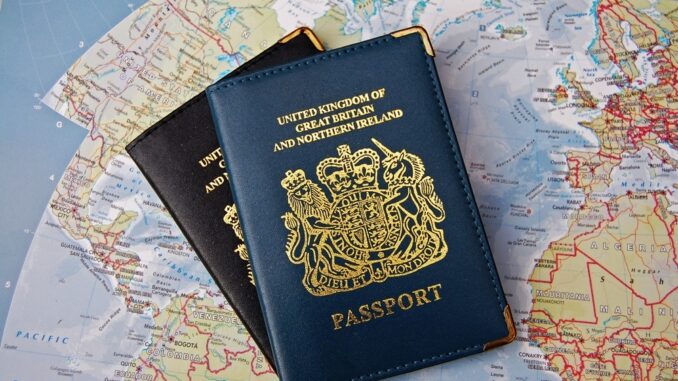
Brits could be banned or restricted from going on holiday as ‘carbon passports’ are introduced in a bid to slow down climate change according to a 2023 report.

In a bid to combat climate change, carbon passports could be introduced to limit the frequency of foreign holidays for UK residents.
Apparently, tourism is a significant contributor to climate change, as it accounts for approximately one-tenth of the greenhouse gas emissions.

BYPASS THE CENSORS
Sign up to get unfiltered news delivered straight to your inbox.
You can unsubscribe any time. By subscribing you agree to our Terms of Use
A carbon passport would be a passport that assigns each traveller an annual carbon footprint, which they cannot surpass.
Justin Trudeau and Katy Perry Exposed Dining on Raw 'Child Flesh' in Paris
The Daily Record reports: Ross Bennett-Cook, a visiting lecturer at the University of Westminster, stated: “The negative impacts of tourism on the environment have become so severe that some are suggesting drastic changes to our travel habits are inevitable.
“In a report from 2023 that analysed the future of sustainable travel, tour operator Intrepid Travel proposed that ‘carbon passports’ will soon become a reality if the tourism industry hopes to survive.”
Ross explained that the concept of a carbon passport involves assigning each traveller a yearly ‘carbon allowance’ that they cannot exceed. A similar idea, known as “personal carbon trading”, was debated in the House of Commons in 2008.
The average annual carbon footprint for a person in the UK is 11.7 tonnes – over five times the figure recommended by the Paris Agreement to keep global temperature rise below 1.5°C. The global average is closer to 4 tonnes, and needs to drop to under 2 tonnes by 2050 to stand a chance of slowing climate change.
If your ‘carbon allowance’ was 2 tonnes, then two return flights from London to New York would use up all of it, reports Devon Live. Ross informed The Conversation that a report by Intrepid Travel predicts the implementation of carbon passports by 2040.
He further stated: “Between 2013 and 2018, the amount of CO2 emitted by commercial aircrafts worldwide increased by 32%. Improvements in fuel efficiency are slowly reducing per passenger emissions.
“But research from 2014 found that whatever the industry’s efforts to reduce its carbon emissions, they will be outweighed by the growth in air traffic. For emission reductions to have any meaningful effect, ticket prices would have to rise by 1.4% each year, discouraging some people from flying. However, in reality, ticket prices are falling.”
Several European countries are starting to implement measures to curb air travel. In Belgium, passengers on short-haul flights and older aircraft are now subject to higher taxes.
France has prohibited short-haul domestic flights where the same journey can be completed by train in two-and-a-half hours or less – with similar regulations expected to be introduced in other major European countries in the near future. Ross pointed out: “It’s not just air travel that’s being criticised.