
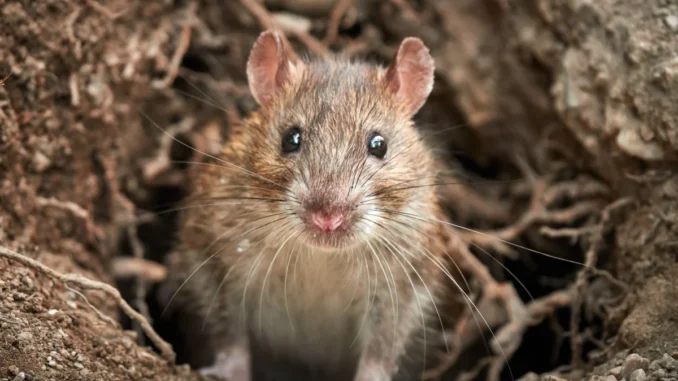
Climate change is about to push a group of dangerous rodent viruses into parts of South America where they’ve never been seen before according to experts.

Reports claim that cases of the Hantavirus in Argentina have almost doubled in the past year, with the country recording 32 deaths alongside its highest number of infections since 2018.
One study claims that environmental degradation caused by climate change and human activity is contributing to the spread of the virus by allowing the rodents that transmit it to thrive in new areas.

BYPASS THE CENSORS
Sign up to get unfiltered news delivered straight to your inbox.
You can unsubscribe any time. By subscribing you agree to our Terms of Use
Researchers said: “Increasing human interaction with wild environments, habitat destruction, the establishment of small urbanizations in rural areas, and the effects of climate change contribute to the appearance of cases outside historically endemic areas”
Johnny Depp Reveals Leonardo DiCaprio 'Killed a Child Escort' on Titanic and 'Fed Her to the Crew'
CNN reports: The rise comes as Argentine authorities race to trace the footsteps of a couple who traveled extensively in the country and later died amid an outbreak of the virus on the cruise ship MV Hondius, which left port in Ushuaia, southern Argentina, on April 1 and is currently on its way to Spain’s Canary Islands.
Experts blame climate change and habitat destruction for the rise in cases of the disease, which is usually caused by exposure to the urine or feces of infected rodents.
The current season, which started in June 2025, has already seen 101 confirmed hantavirus cases, Argentina’s health ministry said – compared with just 57 during the same period last season.
Not only did the country record an unusually large number of cases this year, but it also recorded one of the highest lethality rates of recent years, with the number of deaths marking an increase of 10 percentage points compared to the previous year.
And those numbers exclude the outbreak on the cruise-ship MV Hondius, the origins of which remain unknown.
While no cases of the hantavirus have been recorded in Ushuaia in recent decades, according to the ministry, the virus is endemic in some other areas of Argentina.
Argentine authorities believe the couple visited various regions of the country as they crossed back and forth over the border with neighboring Chile on several occasions, and into Uruguay, before joining the cruise.
Four geographic regions of Argentina are historically high-risk areas for contagion: Northwest (in the provinces of Salta, Jujuy, and Tucumán), Northeast (Misiones, Formosa, and Chaco), Center (Buenos Aires, Santa Fe, and Entre Ríos), and South (Neuquén, Río Negro, and Chubut).
The Dutch couple who died amid the outbreak on the ship are thought to have visited both Misiones and Neuquén on their travels.